What Causes a Buffalo Hump, and Can It Be Removed?
September 15, 2026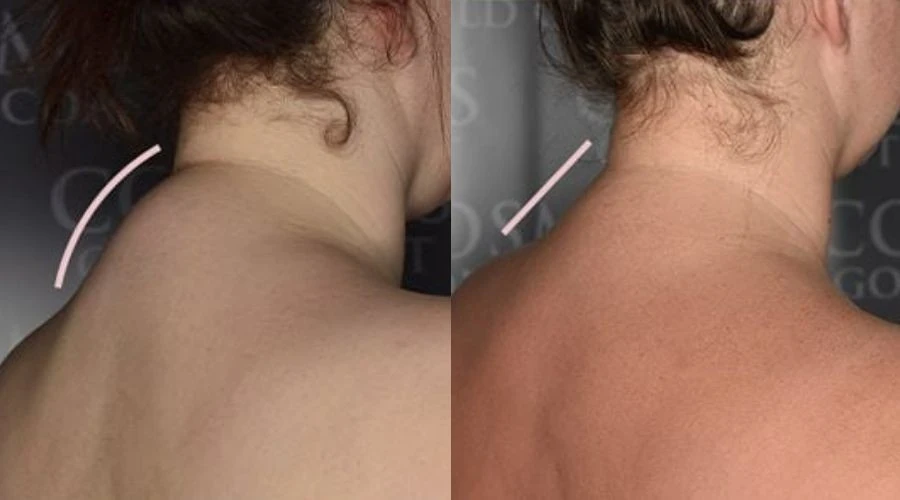
A buffalo hump is a build-up of fat at the back of the neck, between the shoulder blades. Its medical name is a dorsocervical fat pad. Common causes include weight gain, long-term corticosteroid medicines such as prednisone, Cushing’s syndrome and some older HIV medicines. Because some causes need medical treatment, see your GP first to find out why it has developed.
What is a buffalo hump?
A buffalo hump is a soft, rounded collection of fat sitting over the lower neck and upper back, roughly at the level of the bony bump at the base of your neck. It sits in the fatty layer under the skin, not in the spine.
It can range from a small fullness that is only visible in profile to a larger pad that makes it uncomfortable to lie flat, tilt the head back or find clothes that sit well. It does not usually hurt, although some people find the area tender or tight.
What causes a buffalo hump?
There is often more than one factor. The main recognised causes are:
| Cause | How it contributes | What usually comes first |
|---|---|---|
| Weight gain and obesity | Fat can be stored at the back of the neck as part of general weight gain | GP review, weight management support |
| Long-term corticosteroid medicines (for example prednisone) | High steroid levels change where the body stores fat, favouring the face, trunk and back of the neck | Review by the prescribing doctor. Never stop steroids suddenly |
| Cushing’s syndrome | The body makes too much cortisol, often because of a pituitary or adrenal problem | GP assessment, blood or urine tests, specialist referral |
| HIV-associated lipodystrophy | Some older antiretroviral medicines were linked to fat redistribution | Review with the HIV treating team |
| Genetics and ageing | Some people naturally store more fat in this area | GP check to rule out other causes |
| Rare conditions (for example Madelung’s disease) | Unusual fatty growths around the neck and shoulders, often linked to heavy alcohol use | Medical assessment |
Posture is often mentioned online. Slouching and forward head posture can make an existing fat pad look more prominent, but a rounded upper back from posture is usually a different problem.
Is a buffalo hump the same as a dowager’s hump?
No. A buffalo hump is fat. A dowager’s hump is a forward curve of the upper spine (kyphosis), often related to osteoporosis, vertebral fractures or long-term posture.
The difference matters because liposuction only removes fat. It does nothing for a curved spine. A dowager’s hump needs assessment by a GP and may involve bone density testing, physiotherapy or other treatment. Some people have both, which is why an examination comes before any treatment plan.
When should you see a GP first?
See your GP before considering any cosmetic treatment, and especially if:
- The hump appeared over weeks or months rather than years
- You also have weight gain around the face and tummy, a rounder face, purple or wide stretch marks, easy bruising, thin skin, muscle weakness, high blood pressure or high blood sugar (possible signs of Cushing’s syndrome)
- You take, or have recently taken, corticosteroid tablets, injections or high-dose inhalers
- You are on HIV treatment
- The lump is hard, growing quickly, painful, or feels fixed rather than soft
- You have back pain, loss of height or a history of fractures
If a medicine is the likely cause, do not stop or change it on your own. Stopping steroids suddenly can be dangerous. Your prescribing doctor can advise whether the dose can be adjusted.
In Australia, a GP referral is also required before a first consultation for cosmetic surgery, so this visit is a necessary step either way.
Can a buffalo hump go away on its own?
Sometimes it can reduce. If the cause is a medicine or Cushing’s syndrome, treating the underlying problem may reduce the fat pad over time, although it does not always go completely. If weight gain is the cause, losing weight may help. A hump that has been present for a long time, or that relates to genetics, is less likely to change on its own.
What are the treatment options for a buffalo hump?
The right option depends on the cause, your general health and how much the area bothers you.
- Treat the cause: managing Cushing’s syndrome, reviewing medicines or supporting weight loss comes first where relevant.
- Posture and physiotherapy: this will not remove fat, but it can help if poor posture is making the area look larger or causing neck discomfort.
- Liposuction: once medical causes are addressed or ruled out, liposuction can remove fat from the dorsocervical area through small incisions. The fat in this area is often fibrous, and ultrasound-assisted techniques such as VASER liposuction are one way to loosen it before removal. The area is usually treated alongside the upper back, covered on our back liposuction page.
- Surgical excision: occasionally, a very large or unusual fatty mass may need to be cut out, or investigated to confirm what it is.
If the cause is ongoing, such as continued steroid use or further weight gain, fat can build up again after treatment. That needs to be part of the conversation before deciding on surgery.
Who may be suitable for liposuction of a buffalo hump?
People who may be suitable are generally in good health, have had medical causes investigated, have a stable weight and understand what surgery can and cannot change. Liposuction is not a weight-loss treatment; our article on how much weight liposuction removes explains why.
Suitability is assessed in consultation after reviewing your medical history, medicines and an examination of the area.
Risks and considerations
All surgical and invasive procedures carry risks. Results vary between individuals. Material risks of liposuction to the upper back and neck area include:
- Bleeding, bruising and swelling
- Infection
- Fluid collection under the skin (seroma)
- Contour irregularities, lumpiness or asymmetry
- Scarring at incision sites (see our guide to liposuction scars)
- Skin burns from ultrasound energy
- Changes in skin sensation
- Loose skin once the fat is removed
- Recurrence if the underlying cause continues
- Blood clots and reactions to anaesthetic or sedation
There is a cooling-off period of at least seven days after giving informed consent before cosmetic surgery can go ahead. Before proceeding, you should seek a second opinion from an appropriately qualified health practitioner.
Frequently asked questions
Can exercise get rid of a buffalo hump?
Exercise cannot target fat in one spot. It may help with overall weight and posture, which can make the area look smaller, but it will not remove the fat pad itself.
Is a buffalo hump dangerous?
The fat pad itself is not usually harmful. What matters is the cause. It can be a sign of Cushing’s syndrome or a medicine side effect, which is why a GP review comes first.
Will a buffalo hump come back after liposuction?
It can if the cause continues, for example ongoing steroid treatment or weight gain. Keeping a stable weight and managing any medical cause make recurrence less likely, but this cannot be guaranteed.
Does a buffalo hump mean I have Cushing’s syndrome?
Not necessarily. Weight gain and genetics are common causes. A GP can decide whether tests are needed based on your other symptoms.
Can CoolSculpting treat a buffalo hump?
Whether a non-surgical fat reduction treatment is appropriate depends on the size and shape of the area. See our comparison of surgical and non-surgical fat reduction options.
Next step
Start with your GP to understand the cause. If medical causes have been ruled out or treated and you would like to talk about removing the fat pad, a consultation lets a practitioner examine the area, explain your options and assess whether liposuction is suitable for you.
Disclaimer: This article is general information only and does not replace a medical consultation. All surgical and invasive procedures carry risks. Results vary between individuals. Suitability, risks and recovery are discussed in detail during consultation with a qualified medical practitioner. Before proceeding, you should seek a second opinion from an appropriately qualified health practitioner.