What Is Ab Etching? How It Works, Risks and Who It May Suit
September 15, 2026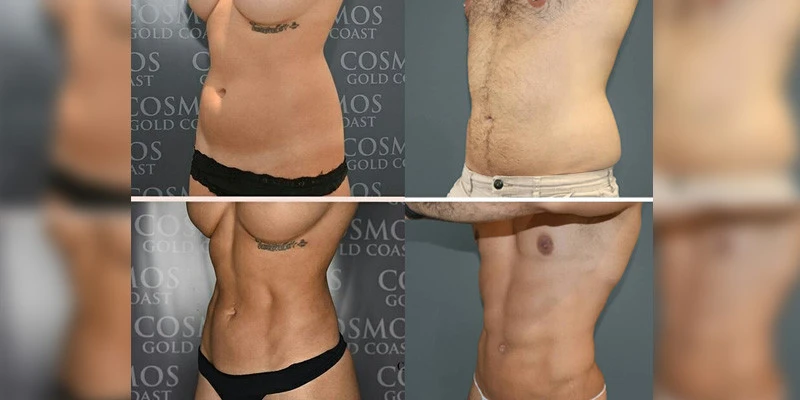
Ab etching (abdominal etching) is a liposuction technique that removes fat along the natural lines of the abdominal muscles to make those lines more visible. It is a surgical procedure, generally considered only for people who are already lean with good skin tone. It does not build muscle, and results can change or look uneven if body weight changes.
What is ab etching?
Ab etching is a form of liposuction that selectively removes fat in narrow bands over the grooves between abdominal muscle segments. The aim is to increase the visibility of the underlying muscle outline.
The technique was first described in the 1990s. It focuses on the lines of the abdomen, usually:
- the vertical line down the centre of the abdomen (linea alba)
- the curved lines at the outer edges of the rectus abdominis muscles (linea semilunaris)
- in some cases, the horizontal lines between muscle segments
Unlike standard liposuction, which reduces fat more evenly across an area, ab etching removes fat in a patterned way. It does not change the muscles themselves. How visible the result is depends on the muscle underneath, the thickness of the fat layer, and skin quality.
How is ab etching performed?
It is performed through small incisions using a thin tube (cannula) to remove fat along marked lines. The steps are broadly similar to other liposuction procedures.
- Marking. The doctor marks the muscle borders while you are standing and tensing your abdomen.
- Anaesthetic. The procedure is done under sedation or general anaesthetic.
- Tumescent fluid. A solution is injected to numb the area and reduce bleeding.
- Fat loosening. In some techniques, ultrasound energy (VASER) is used to help separate fat from surrounding tissue.
- Fat removal. Fat is suctioned along the marked lines, and sometimes thinned more generally over the abdomen.
- Recovery. Incisions are closed or left to drain, and a compression garment is fitted.
Recovery involves swelling, bruising, fluid drainage, compression garments and a period without strenuous exercise. Final results take months to show as swelling settles.
How is ab etching different from hi-def liposuction?
Ab etching focuses on creating lines on the abdomen. High-definition (hi-def) liposuction is a broader body contouring approach that treats fat over and around several muscle groups, which may include the abdomen, flanks, chest, arms or back.
| Ab etching | Hi-def liposuction | Standard liposuction | |
|---|---|---|---|
| Main aim | Emphasise abdominal muscle lines | Contour several muscle groups for a more defined shape | Reduce fat volume in an area |
| Areas | Abdomen | Abdomen and often surrounding areas | Many body areas |
| Fat removal pattern | Narrow bands along grooves | Layered removal around and over muscles, with some areas blended | More even reduction |
| Typical candidate | Lean, visible or palpable abdominal muscles, good skin tone | Similar, often with interest in overall contour | Localised fat that has not responded to diet and exercise |
| Sensitivity to later weight change | High | High | Lower |
Many clinics, including Cosmos Clinic, now use hi-def techniques rather than line-only etching, aiming for a result that blends with surrounding areas. The VASER hi-def liposuction page explains that procedure, recovery and costs.
If your main concern is general fat reduction rather than definition, our guide to surgical fat removal options may be more relevant.
Who may be suitable for ab etching?
People who may be suitable are generally already close to a healthy weight, with abdominal muscles they can feel when tensed, a thin layer of fat, and good skin elasticity. Suitability is always assessed in consultation.
You may be a candidate if you:
- have a stable weight you expect to maintain
- exercise regularly and have some muscle tone in the abdomen
- have a relatively thin, even layer of fat over the abdomen
- have good skin tone without significant loose skin
- are in good general health and do not smoke, or are willing to stop
- understand the result is a change in fat distribution, not muscle
Who may not be suitable?
Ab etching is unlikely to suit people with a thicker layer of abdominal fat, loose skin, or muscle separation, and it is not a weight loss procedure.
It may not be suitable if you:
- are carrying more abdominal fat, or fat that sits inside the abdomen around the organs (visceral fat), which liposuction cannot remove
- have loose or stretched skin, including after pregnancy or large weight loss
- have separated abdominal muscles (diastasis recti) or a hernia
- plan to lose or gain a significant amount of weight, or plan a future pregnancy
- have health conditions that affect healing or bleeding
- have a history of body dysmorphic disorder or ongoing distress about your appearance, which should be discussed with your GP
To understand the limits of what liposuction can do for body weight, read how much weight liposuction can remove. For loose skin around the stomach, see whether liposuction or a tummy tuck suits a flat stomach goal.
Is ab etching permanent?
The fat cells removed do not return, but the result is not fixed. How it looks over time depends largely on your weight, muscle tone and ageing.
After adulthood, the body does not usually make many new fat cells, and fat cells that remain can grow or shrink with weight change. If you gain weight after ab etching, remaining fat can enlarge unevenly. Because fat was removed in lines rather than evenly, this can make the lines look blurred, distorted or unnatural. Significant weight loss may make them look more pronounced than intended. Loss of muscle tone and skin changes with age can also affect the result.
Risks and considerations
All surgical and invasive procedures carry risks. Results vary between individuals.
Risks specific to ab etching and high-definition liposuction include:
- Contour irregularities: unevenness, dents, ridges or lumpiness, which may need further treatment
- Unnatural appearance: lines that look drawn on, sit in the wrong position, or do not match the muscles underneath, especially after weight change
- Asymmetry between sides
- Skin tethering or looseness where skin sticks to underlying tissue or does not retract (see how skin retracts after liposuction)
- Fluid collection (seroma) or blood collection (haematoma)
- Numbness or altered sensation, which may be temporary or persistent
- Skin colour changes, burns or scarring at incision sites or from ultrasound energy (see what liposuction scars usually look like)
- Infection
- Serious complications, which are rare but can be life-threatening, including blood clots, fat embolism and injury to abdominal organs
- Anaesthetic risks
Some people may need revision surgery, and not every irregularity can be fully corrected.
In Australia, cosmetic surgery requires a GP referral before your first consultation, and there is a mandatory cooling-off period of at least 7 days before surgery can be booked. At Cosmos Clinic, patients considering this type of procedure attend two consultations before surgery. Before proceeding, you should seek a second opinion from an appropriately qualified health practitioner.
Frequently asked questions
Does ab etching build abdominal muscles?
No. It only removes fat. Muscle shape and strength come from exercise.
Can women have ab etching?
Yes, people of any gender may be assessed. The intended look is discussed in consultation, as some prefer subtle definition.
Can ab etching be reversed?
Not easily. Fat grafting may be used to soften some irregularities, but results of corrective surgery are not predictable.
Will I still need to exercise afterwards?
Yes. Maintaining a stable weight and muscle tone is important to how the result looks over time.
How much does ab etching cost?
Cost depends on the areas treated and your assessment. See the hi-def liposuction page for current pricing information.
If you would like to know whether ab etching or another approach may be suitable for you, a consultation with one of our doctors can explain the options, risks and realistic outcomes.
Disclaimer: This article is general information only and does not replace a medical consultation. All surgical and invasive procedures carry risks. Results vary between individuals. Suitability, risks and recovery are discussed in detail during consultation with a qualified medical practitioner. Before proceeding, you should seek a second opinion from an appropriately qualified health practitioner.