Weak Jawline: What Causes It and What Are the Options to Improve It?
September 15, 2026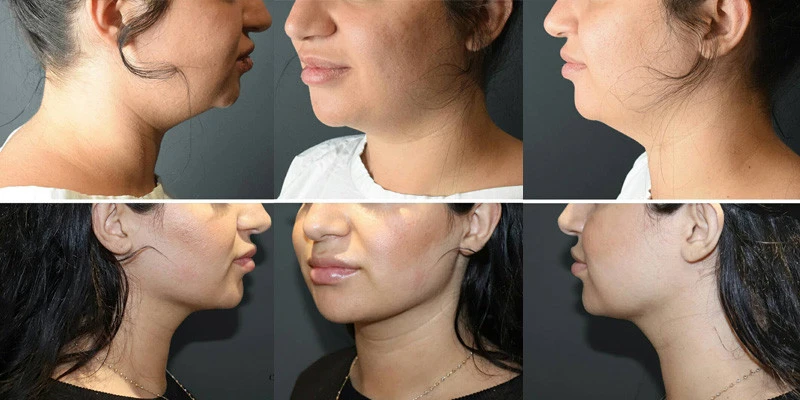
A weak or undefined jawline usually comes from one or more of four things: a small or set-back chin, fat under the chin and along the jaw, loose skin, or the way facial fat shifts with age. The right option depends on which of these is present, so a medical assessment comes before any choice between surgical and non-surgical treatment.
What causes a weak jawline?
Most people with a less defined jawline have a combination of causes rather than one. Identifying the main cause matters, because a treatment aimed at fat will not change bone structure, and a treatment aimed at volume will not tighten loose skin.
- Chin and jaw structure. A chin that sits further back (retrogenia) or is small in proportion to the face (microgenia) can make the jawline and neck look less distinct in profile. This is largely inherited.
- Fat under the chin (submental fat). Fullness under the chin softens the angle between the jaw and neck. It can be genetic and does not always relate to body weight.
- Skin laxity. Skin loses collagen and elasticity with age, sun exposure and weight change, so the skin under the jaw may not sit as closely against the underlying structures.
- Jowls and fat descent. Fat pads in the cheeks can move downward over time, blurring the line of the jaw.
- Muscle. Prominent neck bands (platysma) or a large masseter (chewing) muscle can change the shape of the lower face.
Is a weak jawline the same as a double chin?
No. A double chin describes fullness under the chin, while a weak jawline describes a lack of definition along the jaw, which may or may not include fullness. Someone with a set-back chin can have very little fat and still have a soft jaw-to-neck angle. Someone with a well-projected chin can have a double chin from fat alone.
What are the options to improve jawline definition?
Options fall into non-surgical treatments and surgical procedures. The table below matches common causes to the options usually discussed. It is a general guide, not a treatment plan.
| Main cause | What you may notice | Options commonly discussed | More information |
|---|---|---|---|
| Small or set-back chin | Chin sits behind the lips in profile | Dermal filler to the chin; chin implant or sliding genioplasty (surgery) | chin enhancement with filler |
| Fat under the chin | Fullness below the jaw, soft neck angle | Chin or neck liposuction; fat freezing; fat-dissolving injections | chin liposuction recovery guide |
| Fat along the jaw and jowls | Heaviness along the lower face | Lower face liposuction; face or neck lift | lower face liposuction |
| Loose skin | Skin hangs below the jaw or neck | Surgical neck lift or facelift; some energy-based skin treatments for mild laxity | neck liposuction vs chin liposuction |
| Large masseter muscle | Square or wide lower face | Muscle-relaxing injections | jawline contouring |
What non-surgical options are there?
Non-surgical options add volume, relax muscle or reduce small amounts of fat. They do not remove loose skin and they are not permanent.
- Dermal filler. Injected along the jaw or chin to add projection or structure. Dermal fillers and muscle-relaxing injections are prescription-only medicines, so they can only be used after a consultation with a prescribing practitioner. How long results last varies between individuals.
- Muscle-relaxing injections to the masseter. These reduce the activity of the chewing muscle, which can make a wide lower face appear narrower over time. Repeat treatment is needed to maintain the effect.
- Fat-dissolving injections. A prescription-only medicine injected into fat under the chin. More than one session is usually required and swelling afterwards can be significant.
- Fat freezing (CoolSculpting). A device that cools a fold of fat under the chin. It needs enough pinchable fat to fit the applicator. Our article on whether fat freezing works on a double chin covers suitability in more detail.
What surgical options are there?
Surgery is usually discussed when there is more fat, loose skin, or a structural chin concern that injectables cannot address.
- Chin or neck liposuction. Removes fat under the chin and, in neck liposuction, along the neck and jaw through small incisions. At Cosmos Clinic this is performed with Vaser (ultrasound-assisted) liposuction. It does not remove excess skin.
- Lower face liposuction. Treats fat along the jowls and lower face as well as under the chin.
- Neck lift (platysmaplasty). Removes excess skin and tightens neck muscles through incisions near and behind the ears. It involves a longer recovery than liposuction.
- Chin implant (mentoplasty) or sliding genioplasty. Changes chin projection with an implant or by repositioning the chin bone.
Before any cosmetic surgery in Australia you need a referral from a GP or other non-cosmetic medical practitioner, you will have at least two consultations, and there is a cooling-off period of at least 7 days after you give informed consent before surgery can go ahead.
Risks and considerations
All surgical and invasive procedures carry risks. Results vary between individuals. Specific risks depend on the treatment chosen:
- Liposuction of the chin, neck or jaw: swelling, bruising, infection, bleeding or haematoma, contour irregularities or asymmetry, numbness, skin burns from the ultrasound device, temporary or rarely lasting weakness of the lower lip from injury to the marginal mandibular nerve, and risks associated with sedation or anaesthesia.
- Neck lift, chin implant or genioplasty: scarring, infection, implant movement or exposure, altered sensation of the chin or lower lip, and a longer recovery.
- Dermal filler: bruising, swelling, lumps, infection, and rarely blocked blood vessels (vascular occlusion), which can cause skin damage or, very rarely, vision loss and needs urgent treatment.
- Muscle-relaxing injections: bruising, temporary chewing weakness, and an uneven smile if nearby muscles are affected.
- Fat freezing and fat-dissolving injections: swelling, numbness and tenderness; fat freezing can rarely cause the treated fat to enlarge (paradoxical adipose hyperplasia).
Liposuction and fat reduction treatments also do not stop future changes from ageing or weight gain.
Who may be suitable, and when should you see a doctor?
Suitability is assessed in consultation. As a general guide, people with good skin tone and a localised fat concern are often assessed for liposuction or fat reduction, people with mainly structural concerns are assessed for chin options, and people with significant loose skin are assessed for lifting procedures. A new lump, swelling on one side of the jaw, or a change in the jaw that is painful should be checked by your GP first, as these are medical rather than cosmetic concerns.
At a consultation, a doctor will review your medical history and medications, examine your face, jaw and neck, explain which options may or may not suit you, and outline risks, recovery and fees.
Frequently asked questions
Can jaw exercises give me a stronger jawline?
There is little reliable evidence that facial or “jawline” exercises change jawline definition. Exercise cannot change bone structure, and it does not target fat under the chin specifically.
Will losing weight improve my jawline?
If fullness is due to overall body fat, weight loss may help. Fat under the chin that is genetic, and changes caused by chin shape or skin laxity, often do not change much with weight loss alone.
Does a weak jawline get worse with age?
It can. Loss of skin elasticity, bone changes and fat descent tend to soften the jawline over time, although the rate varies between people.
Can I combine treatments?
Sometimes, for example chin filler with liposuction. Combining treatments can mean more swelling and a longer recovery, and your doctor will explain whether staging treatments is more appropriate.
Do I need a referral?
Yes for cosmetic surgery such as liposuction or a neck lift. For injectable treatments you do not need a GP referral, but you must have a consultation with a prescribing practitioner before treatment.
If you are unsure which cause applies to you, a consultation is the place to start. A doctor can assess your chin, jaw, neck and skin and explain the options, risks and recovery for your situation.
Disclaimer: This article is general information only and does not replace a medical consultation. All surgical and invasive procedures carry risks. Results vary between individuals. Suitability, risks and recovery are discussed in detail during consultation with a qualified medical practitioner. Before proceeding, you should seek a second opinion from an appropriately qualified health practitioner.