Can Liposuction Remove Bra Fat? Causes, Options and Limits
September 15, 2026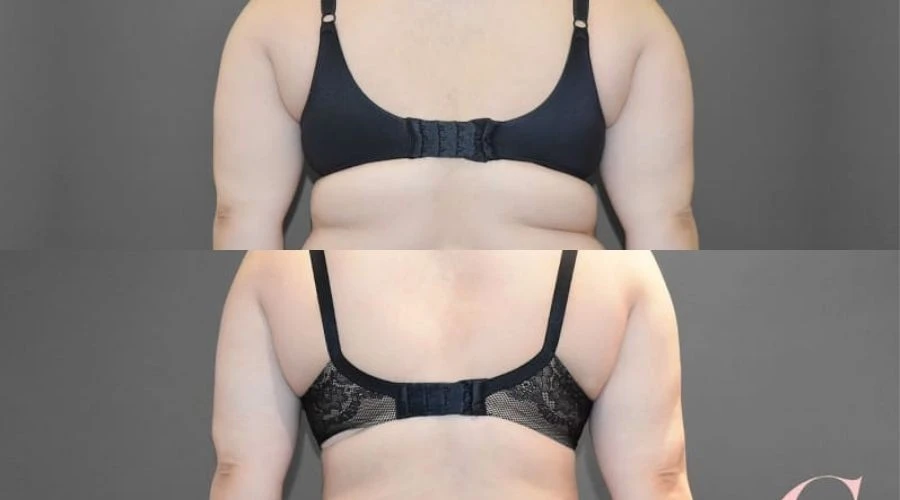
Liposuction can remove fat from around the bra line in people who have localised, pinchable fat and reasonable skin elasticity. It does not tighten loose skin, change posture or reduce fat that is part of overall weight gain. Bra fat can also be affected by bra fit, so it is worth ruling that out before considering any procedure.
What is bra fat?
Bra fat, also called bra bulge or bra overhang, is soft tissue that sits above, below or at the sides of the bra band on the upper back. It usually shows as a roll when the band presses into the skin.
It can appear on the back under the shoulder blades, at the sides of the chest wall near the armpit, or both. It is different from fat on the lower back and above the buttocks, which we cover in our article on back verandah fat.
What causes bra fat?
Bra fat usually comes from a mix of genetics, weight change, hormones and age, often made more visible by a tight band. Common contributors include:
- Genetics. Where your body stores fat is largely inherited.
- Weight gain. Fat stored on the upper back and sides often increases with overall weight.
- Hormonal change. Menopause and pregnancy can shift where fat is stored.
- Age and skin changes. Skin loses elasticity over time, which can make soft tissue fold more readily.
- Bra fit. A band that is too tight or sits too high compresses tissue and creates a visible roll.
Can you get rid of bra fat with exercise?
Exercise and diet can reduce overall body fat, which often reduces bra fat too. You cannot target fat loss to one spot, so upper back exercises strengthen the muscles but do not specifically burn fat in that area.
Some people find that fat in this area is slow to change even when their weight is stable and they are active. That is often when procedures are considered. A professional bra fitting is also a simple first step, since a better-fitting band can reduce the overhang without any treatment.
Can liposuction remove bra fat?
Liposuction can reduce fat around the bra line when the tissue is mostly subcutaneous fat. A practitioner makes small incisions and uses a thin cannula to remove fat, sometimes with ultrasound energy (Vaser) to help loosen it first.
The upper back often has denser, more fibrous fat than areas like the abdomen, and the skin there can be thicker. How the area responds, including how the skin settles afterwards, varies between individuals. The details of the technique are on our back and flanks liposuction page and the Vaser liposuction page.
Liposuction will not:
- reduce overall body weight in a meaningful way (see how much weight you can lose with liposuction)
- remove loose or folded skin
- change fat that returns with future weight gain in untreated areas
- change breast size, which is a separate question covered in can liposuction reduce breast size
Liposuction vs non-surgical fat reduction for bra fat
Both approaches aim to reduce fat cells in a localised area, but they differ in how they work, what is involved and how gradually changes appear.
| Liposuction | Non-surgical fat reduction (e.g. cryolipolysis) | |
|---|---|---|
| How it works | Fat is removed through small incisions with a cannula | Controlled cooling damages fat cells, which the body clears over time |
| Anaesthesia | Local anaesthetic with sedation, or general anaesthetic | None |
| Incisions | Yes, small | No |
| When changes appear | As swelling settles, timing varies | Gradually, timing varies |
| Number of sessions | Usually one procedure | Varies, discussed at consultation |
| Main risks | Surgical and anaesthetic risks, contour irregularity | Discomfort, numbness, bruising, and rarely paradoxical adipose hyperplasia (fat enlargement) |
Neither option suits everyone, and the degree of change varies. Our overview of fat removal procedure options compares these approaches in more depth, and the CoolSculpting page explains the non-surgical option.
Who may be suitable for liposuction on the bra line?
People who tend to be assessed as suitable are at or near a stable weight, have localised pinchable fat and have reasonable skin elasticity. They also understand that liposuction changes contour rather than weight.
It may not be the right choice if you:
- plan significant weight loss or a pregnancy soon
- have mainly loose skin rather than fat
- have medical conditions that increase anaesthetic or bleeding risk, or smoke
- are hoping for a specific result that cannot be guaranteed
Suitability is assessed in consultation, and a practitioner may suggest trying non-surgical options first.
Questions to ask at your consultation
A consultation is a chance to understand the procedure and the person performing it. Useful questions include:
- What are the doctor’s qualifications and AHPRA registration?
- Is the fat in my bra area suited to liposuction, or is loose skin the main issue?
- What type of anaesthesia is proposed and where will the procedure be done?
- What risks apply to me specifically?
- What does recovery involve, and how much time off should I plan for?
- What follow-up care is provided, and who do I contact if I have a concern after hours?
Risks and considerations
All surgical and invasive procedures carry risks. Results vary between individuals. Material risks of liposuction on the upper back and bra line include:
- bruising, swelling and discomfort
- bleeding, haematoma and seroma
- infection
- contour irregularities, dents or asymmetry
- numbness or altered sensation
- skin changes, including burns with ultrasound-assisted devices
- scarring at incision sites (see scarring after liposuction)
- blood clots and, rarely, fat embolism
- reactions to anaesthetic or sedation
Non-surgical fat reduction also carries risks. All procedures carry risks, and results vary.
Recovery after liposuction involves a compression garment, modified activity and follow-up appointments. Recovery time varies and your practitioner will advise when you can return to work and exercise. In Australia, cosmetic surgery requires a GP referral, two consultations (one in person with the performing doctor) and a cooling-off period of at least seven days before surgery can be booked. You may also wish to seek a second opinion from an appropriately qualified health practitioner.
FAQ
Is bra fat the same as back fat?
Bra fat is one type of back fat, sitting around the band line. Fat on the lower back and above the buttocks is a different area.
Can men have fat in the same area?
Yes. Fat on the upper back and sides of the chest wall occurs in men too, and the same principles apply.
Will bra fat come back after liposuction?
Fat cells removed are not replaced, but remaining fat cells can enlarge with weight gain, so the area can change over time.
Can bra fat be treated at the same time as other areas?
Treating more than one area in a session is sometimes possible, but it can increase risk and recovery. This is assessed individually.
Can a better bra fix bra fat?
It can reduce the visible roll if the band is too tight or sits too high. It does not change the fat itself.
If fat around the bra line is a concern, a consultation with a registered medical practitioner can help work out whether fat, skin or bra fit is the main cause and what options may suit you.
Disclaimer: This article is general information only and does not replace a medical consultation. All surgical and invasive procedures carry risks. Results vary between individuals. Suitability, risks and recovery are discussed in detail during consultation with a qualified medical practitioner. Before proceeding, you should seek a second opinion from an appropriately qualified health practitioner.