Liposuction Scars: Where They Sit, How They Heal and What Helps
September 15, 2026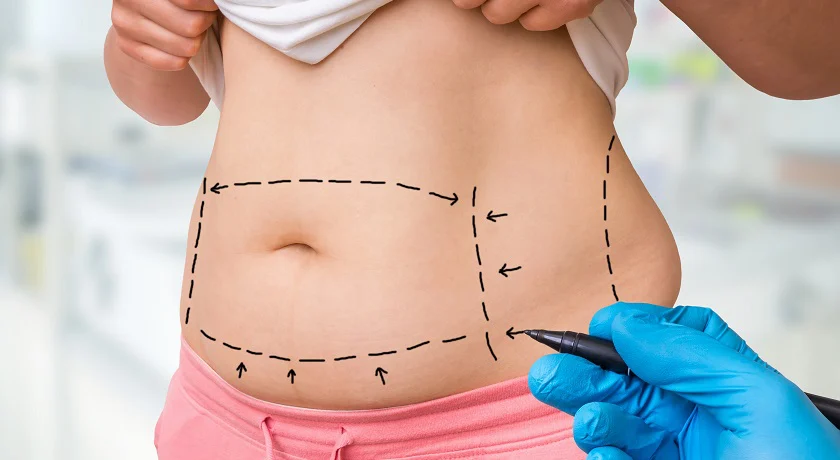
Liposuction leaves small scars where the cannula enters the skin. These incisions are usually short and placed in areas such as the belly button, bikini line or skin creases, so they are easier to hide. Most scars start pink or red and fade over many months, but how they settle varies with skin type, genetics, the area treated and aftercare.
Does liposuction leave scars?
Yes. Any cut through the skin heals with a scar, and liposuction is no exception. The scars are small because the instrument used is thin, but they are permanent marks rather than something that disappears completely.
During liposuction, a thin tube called a cannula is passed under the skin through short incisions. With ultrasound-assisted techniques such as VASER, a probe is first used to loosen the fat before it is suctioned out. The number of incisions depends on how many areas are treated and how much fat needs to be reached from different angles.
The size of each incision depends on the technique and instruments used.
Where are liposuction incisions made?
Incisions are usually placed where they are less visible or can be covered by underwear or swimwear. Your practitioner plans the sites before surgery and will show you where they expect to place them.
| Treatment area | Common incision sites |
|---|---|
| Abdomen | Inside the belly button, along the bikini line |
| Flanks and back | Within the underwear line, lower back creases |
| Thighs | Groin crease, inner thigh, buttock fold |
| Arms | Near the elbow or armpit crease |
| Chin and neck | Under the chin, behind the earlobes |
| Male chest | Edge of the areola, armpit crease |
Placement is a balance between hiding the scar and reaching the fat evenly. Sometimes an incision needs to go somewhere slightly more visible to get a smooth contour.
How do liposuction scars change over time?
Most small surgical scars follow a similar pattern: red or pink at first, then gradually flatter and paler. The full process of scar maturation takes many months, and often a year or more.
- First days: incision sites may seep fluid, which is expected after liposuction because of the fluid used during surgery. Dressings and a compression garment are applied.
- First few weeks: the incisions close and look pink or red. They may feel slightly firm.
- First few months: the scar may look darker or more raised before it starts to settle. This is part of normal remodelling.
- Six to twelve months and beyond: in many people the scar softens and fades towards a paler line, although this varies.
Your practitioner will check the incisions at your follow-up appointments and tell you if anything is not healing as expected.
Does skin tone affect liposuction scars?
Skin tone can influence how a scar looks. On fairer skin, scars often fade to a pale line over time. On darker skin tones, scars are more likely to heal darker than the surrounding skin (post-inflammatory hyperpigmentation), which can take longer to fade.
These are tendencies, not predictions. Healing varies between individuals and a visible scar is possible on any skin type. If you have darker skin or a history of pigmentation after cuts, mention it at your consultation so incision placement and aftercare can be planned with this in mind.
What are keloid and hypertrophic scars?
A hypertrophic scar is raised and red but stays within the edges of the original incision. A keloid scar grows beyond the incision and can keep enlarging, often feeling itchy or tender. Both happen when the body produces too much collagen during healing.
Keloids are more common in people with a personal or family history of them and in people with darker skin. They can form after any skin injury, including a small surgical incision. If you have had a keloid before, tell your practitioner before surgery. It does not always rule out liposuction, but it affects the conversation about risk.
How can you help liposuction scars heal well?
Good wound care and following your aftercare instructions give scars good conditions to heal. Standard aftercare usually includes:
- Wound care: keep incisions clean and follow the dressing instructions you are given. Do not pick at scabs.
- Compression garments: worn as directed to manage swelling and support the treated area while it heals. Our guide to how compression garments work after liposuction and signs yours is too tight covers this in detail.
- Silicone gel or sheets: once the incision has fully closed and your practitioner agrees, silicone products are commonly used to help scars flatten.
- Sun protection: new scars can darken with sun exposure. Cover them or use a broad-spectrum sunscreen once the skin has closed.
- Nutrition and not smoking: smoking slows wound healing. Our article on foods and habits that can slow wound healing after surgery explains what to consider.
Additional scar treatments, such as steroid injections or laser, are not part of routine aftercare. They are only considered in specific situations, such as a keloid or hypertrophic scar, after a clinical assessment. For established scars from other causes, see our scar treatment options.
Risks and considerations
Scarring is only one part of the risk picture for liposuction. All surgical and invasive procedures carry risks. Results vary between individuals. Material risks include:
- Visible, raised, stretched or darkened scars, including keloid or hypertrophic scarring
- Infection at incision sites
- Skin burns at incision sites from ultrasound energy
- Bleeding, bruising and prolonged swelling
- Fluid collection under the skin (seroma)
- Contour irregularities, dimpling or asymmetry
- Changes in skin sensation, which may be temporary or longer lasting
- Loose skin where fat has been removed (see skin retraction after liposuction)
- Blood clots (deep vein thrombosis or pulmonary embolism) and reactions to anaesthetic or sedation
In Australia, you need a referral from your GP before your first consultation for cosmetic surgery, and there is a cooling-off period of at least seven days after giving informed consent before surgery can go ahead. Before proceeding, you should seek a second opinion from an appropriately qualified health practitioner.
When should you contact your clinic about a scar?
Contact your clinic promptly if an incision becomes increasingly red, hot, swollen or painful, discharges pus, reopens, or if you develop a fever. Also let your practitioner know at follow-up if a scar is growing beyond its edges, becoming itchy and raised, or darkening noticeably.
Frequently asked questions
Will I need stitches after liposuction?
It depends on the incision size and your practitioner’s approach. Some incisions are left to drain and close on their own, others are closed with a suture. Your practitioner decides this on the day and explains how to care for them.
Can I shower with liposuction incisions?
When you can shower depends on your dressings and your practitioner’s advice. Follow the instructions you are given and pat incisions dry.
Can old liposuction scars be revised?
Sometimes. Options depend on the type of scar. A practitioner needs to assess the scar before recommending anything.
Are scars different with VASER compared with traditional liposuction?
Both techniques use small incisions to insert a cannula. Scarring depends more on the individual, incision care and the area treated than on the technique name. Ask your practitioner about how incisions are protected during your procedure.
Do scars affect whether I am suitable for liposuction?
A history of keloid or poor wound healing is part of the suitability assessment, along with your general health, skin quality and goals.
Talk to a practitioner about your concerns
If scarring is one of your concerns, raise it at your consultation. Your practitioner can show you where incisions are likely to go, explain how your skin may heal and assess whether liposuction is suitable for you. For an overview of the procedure itself, see our VASER liposuction page. Suitability is always assessed in consultation.
Disclaimer: This article is general information only and does not replace a medical consultation. All surgical and invasive procedures carry risks. Results vary between individuals. Suitability, risks and recovery are discussed in detail during consultation with a qualified medical practitioner. Before proceeding, you should seek a second opinion from an appropriately qualified health practitioner.