How Much Fat Can Liposuction Safely Remove?
The amount of fat you might wish to remove through liposuction is likely to be different to someone else. Maybe you’re considering liposuction to sculpt your waistline, while someone else may be wanting to transform their body shape entirely.
There is a general guideline that states the maximum amount of fat that can be safely removed is 5 litres per procedure. This limit is regardless of your weight, your percentage of body fat or your desired result.
However, a 2015 study suggests that this guide should be replaced with a sliding scale based on the patient’s Body Mass Index (BMI).
“The number is just picked out of a hat,” said plastic surgeon Dr Gutowksi
Many surgeons questioned this guideline as there was no scientific data to support this absolute threshold. For years there was debate over the way the volume limit is calculated.
“The problem is that this guideline seems like it was picked out of a hat”, said Dr Karol Gutowski a clinical associate professor at the University of Illinois at Chicago and a board-certified plastic surgeon, “…there’s no data behind it. No science.”
So, Dr Gutowski and his colleagues established a database to record the outcomes of liposuction procedures performed by board-certified plastic surgeons over the previous fifteen years. The aim was to evaluate the correlation between liposuction volume and any complication risk, taking into account the patient’s BMI.
The findings, published in the September issue of Plastic and Reconstructive Surgery, revealed that those with a higher BMI could have more fat safely removed by liposuction.
During the study, the investigators tracked over 4,500 liposuction patients. Most of those patients were women. However, a rise in men undergoing the cosmetic surgery was seen. A large majority of the patients were treated as outpatients and were able to go home the same day following the procedure.
Did Risk Of Complication Rise When More Fat Was Removed?
The researchers did find a correlation between complication risk and increased fat removal. Patients who experienced complications had large liposuction volumes, on average 3.4 Litres and higher BMIs.
Those who had more than 5 Litres of fat removed, increased their complication rate to 3.7 per cent.
After analysing the information gathered, Dr Scot Glasberg, president of the American Society of Plastic Surgeons said, “the reality is liposuction is incredibly safe”. In fact, the total complication rate was less than 1.5 per cent, with most of the complications not deemed serious and no deaths occurring.
The Risks Of Complication From Removing Too Much Fat
What are the risks? The body’s normal response to the trauma of the surgery is to swell, and excess fluid can build-up in the cavities where the fat has been removed. Most of the fluid will clear within six to eight weeks, however, sometimes seroma will form.
Generally, seroma is not considered a serious complication, and usually, it will resolve slowly on its own. However, depending on the severity, the surgeon might remove it by draining the excess fluid to speed up recovery.
Possible complications of removing excessive amounts of fat include the following;
- Unattractive lumpiness or hallow dimpling of the skin where areas have been “over-suctioned”.
- Increased health risks such as anaesthesia-related reactions, infections and oedema.
- Longer surgical procedures can increase the likelihood of blood clots forming, seromas, drop in blood pressure and toxicity.
- Fluid build-up, also known as seroma which can require drainage (the complications that occurred were almost all due to an increase in seromas).
BMI Can Help Determine Liposuction Treatment
Dr Gutowski said that through their research they identified the key factor in the liposuction complication risk to be the patient’s BMI. Those with the higher BMI were better able to tolerate large-scale fat removal during the procedure than those with a lower BMI.
This prompted the authors to introduce the concept of a “relative liposuction volume threshold” which is based on BMI. This tool enables surgeons to have a sliding scale to assess complication risk and see where this would increase for each individual patient.
Which makes sense considering that for a patient weighing 50 kg, removing 1 litre of fat may be excessive, whereas removing 4 litres of fat during one liposuction procedure in a patient of 100 kg might not be excessive.
Each Patient’s Individual Risks Must Be Considered
In addition to the BMI sliding scale approach, each patient’s own individual risk factors must also be considered. Considerations such as the length of the surgery, adjunct cosmetic procedures and the patient’s overall health before surgery should all be taken into account when evaluating the liposuction risk.
Liposuction for Removing Different Amounts of Fat Based On BMI, Individual Risks & Desired Results
Cosmos Clinic surgeons use this tool and consider the patient’s desired results to determine the safety and most effective treatment for the patient.
“Our risk assessment tool can further aid shared decision-making between the practitioner and patient by linking BMI and liposuction volumes,” adds Dr Mitchell Kim of Cosmos Clinic Gold Coast.
Vaser Liposuction
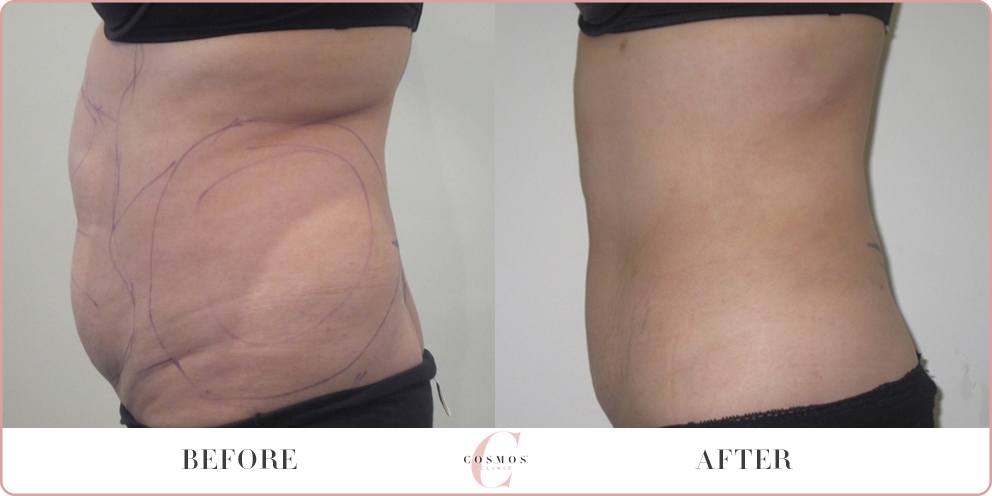
This is your typical liposuction used to remove stubborn fat from problem areas such as the tummy, love handles, arms, back, flanks, legs and even the chin. Here is an example of a Cosmos Clinic patient’s results from Vaser liposuction performed in the abdominal area.
Mega Liposuction
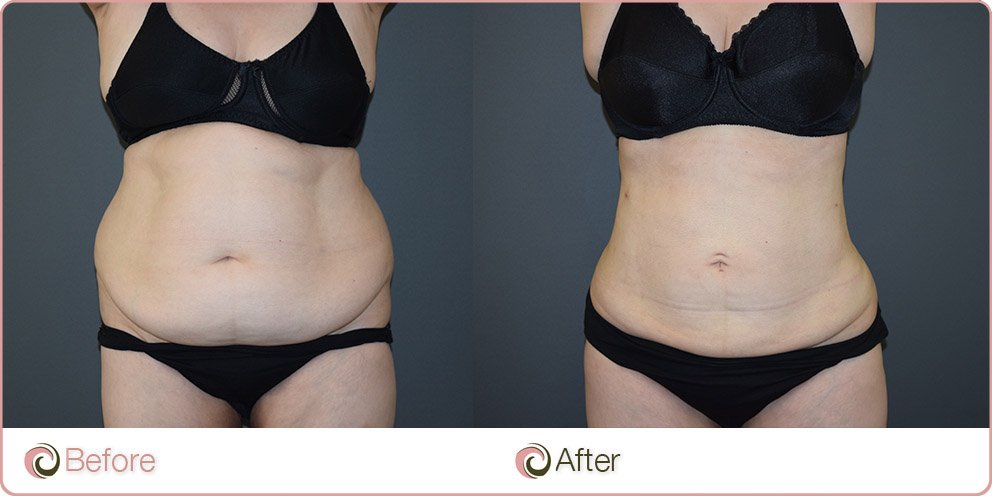
Some patients who are overweight may be suitable candidates for Mega Liposuction. Cosmos Clinic performs Mega Liposuction procedures using Vaser (ultrasound) liposuction if it’s deemed the best option for the patient. This procedure can achieve significant results for patients and Cosmos Clinic surgeon Dr Joseph Ajaka reveals that mega liposuction patients notice a big drop in appetite too. Mega liposuction can remove up to 10 litres of fat, to give you an idea of what’s possible, check out some mega liposuction before and after photos, here is an example;
Vaser Hi-Definition
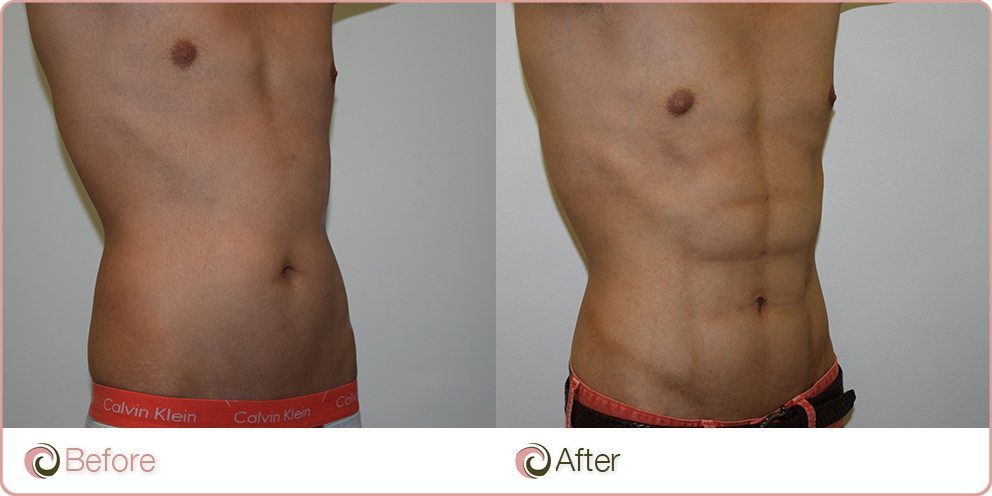
Vaser Hi-Definition Liposuction is for patients who already have a relatively athletic physique and want to achieve a more defined look.
To learn more about the different types of liposuction check out our post on Australia’s most popular type of liposuction.
Liposuction May Not Be The Answer
It is important to note here that liposuction is actually not a weight loss procedure. You will lose some weight, yes, but think of liposuction more like a body sculpting procedure to help remove stubborn fat that is resistant to a healthy diet and exercise.
A benefit of Vaser liposuction is that it does cause the skin to tighten but if an excessive amount of fat is removed patients can be left with sagging skin.
Dr Ajaka, explains that patients requiring greater amounts of fat removed may be better candidates for procedures such as a tummy tuck or thigh lift if they have excessive skin.
Those who are overweight and want to undergo liposuction may see better results by beginning with making some lifestyle changes and committing to losing some of the additional weight through exercise and diet before the treatment.
To get a better idea of how much fat can be removed through liposuction, it’s often better to see some results than talk about litres of fat. Check out more before and after photos and learn about Vaser Liposuction here, also see our article about life after lipo which gives tips on how to optimise liposuction results and maintain your post-liposuction physique long term.
Did you know your FAT feels STRESS?
We all know that carrying extra body fat can lead to some pretty serious health conditions such as obesity, heart disease and diabetes. But according to a team of researchers in the U.S., the role of fat within the body may be more complex than we first thought. In a recent study, it has been suggested when your body is under stress, it takes cues not only from the brain, but also from the fat itself.
The ‘Butt’ Has Swept the Globe
2015 has proven to be the year of butts with a steady rise in the number cosmetic procedures performed in the US, UK and now Australia aimed to enhance the buttocks. According to Google, the term “butt implants” received a massive 40,500 searches in the month of March 2015 alone.
We can thank the curvaceous celebrities like Jennifer Lopez, Beyoncé, Nicki Minaj and not to forget Kim Kardashian, who has perhaps one of the most famous behinds in the world, for this growing trend. Move over selfies, belfies are now all the rage!
How menopause affects women’s weight
It’s no secret that one of the top unwelcome changes for women experiencing menopause is weight gain. At our clinic, we meet many women who struggle to shift the bulge around their midsection that has snuck up on during this period of metabolic change. Most haven’t changed the way they have been eating or significantly reduced their exercise, but are still seeing an unsightly roll develop over their jeans.
And let us tell you, these women we meet in our consulting rooms are not alone. About 30 percent of women in Australia between the ages 50 – 59 are not just overweight, but are obese. According to The Australian Institute of Health & Welfare, this extra weight gain is generally redistribute into the waistline area as women’s age increases. The risks of carrying this additional abdominal fat are high and go well beyond vanity concerns. These include elevated blood pressure, heart disease and diabetes, just to name a few.
A Lack of Beauty Sleep Can Make You Appear Sad and Increase Your Skin Aging
For years, we have been told that a lack of sleep affects our memory and cognitive performance. Now here’s more evidence to suggest sleep should be a priority. According to a recent study which explores the facial cues of those who are not getting enough beauty sleep verses those who do, you look “sad” when you are sleep-deprived. Great. So not only do we feel crappy and don’t function well, we look terrible to others regardless of how much concealer we layer under our eyelids.
Do you wear makeup at the gym?
Let’s admit it, the gym is no longer the place you can turn up to with bed hair, a baggy t-shirt and a pair of shorts and just go about your workout. Now days the gym is a place not only to sweat it out, but also to show off your latest workout gear and look. God forbid you bump into someone you know looking like you just rolled out of bed and with a makeup-free face.
These days it seems a little lip gloss doesn’t even cut it and wearing makeup when exercising has become the norm. While we know that makeup melting down our face as we start to perspire in a grueling spin class is a pretty good reason not to apply it, what many of us don’t know is how damaging wearing makeup when exercising is to the skin.
Dermatologists world-wide are trying to convince ladies to ditch the vanity and stop wearing makeup to the gym and for good reason.
Speed up Your Tummy Tuck Recovery
A tummy tuck, otherwise known as an Abdominoplasty, is an extensive cosmetic surgery aimed to remove excess skin and fat from the belly and in the process tightening the abdominal muscles. This will improve the contours around the recipient’s waistline, leaving them with a flatter, more toned stomach. It’s a popular cosmetic procedure due to its ability to transform the recipient’s shape and give back their confidence.
Recovery is often a concern for many patients who undertake the cosmetic surgery. While the process is not going to be pain-free and you are not going to be able to resume your daily activities the day after, we can give you plenty of tips for a faster recovery post tummy tuck surgery.
What Makes Belly Fat So Stubborn?
Belly fat is one of the most common problems we see at Cosmos Clinic as it appears to be the most stubborn of the fats in the body. For many, belly fat is the first place excess kilos goes and the last place to leave. This can explain why getting rid of excess weight across the midsection receives the most attention from mainstream weight loss programs and dieting products. And let’s face it, who doesn’t want killer abs?
Like many, you may have been spending hours at the gym working on your abs with little to no results. Believe it or not, exercising may not be the answer to get rid of the excess belly fat. We look into what makes belly fat so stubborn and why your fitness regime might not be the solution to a flatter stomach.
More Than Skin Deep: How Are Stretch Marks Formed?
Stretch marks are an extremely common problem, particularly in women. And while they are usually benign, their unsightly appearance is the source of cosmetic concern for a lot of people. As stretch marks effect so many people there are countless old wives’ tales surrounding the cause as well as plenty of tips to prevent or even get rid of them for good.
Lathering yourself with olive oil, cocoa butter or Vicks vapour along with vigorous massage has been tried and tested by many to help reduce the severity of their stretch marks. But does it actually work or are you wasting time and money? We’re here to try and dispel the myths surrounding stretchmarks and give you all the facts!
10 Causes of Premature Ageing
No-one has ever opened their gratitude journal and written “I’m so grateful I have aged prematurely and look older than I am”. True story.
So – it’s probably fair to assume premature ageing is something best avoided. It’s easier than you think. Here are the top ten causes and some strategies to avoid them.
1) CAUSE: Genetics
STRATEGY: Ok, so this one is as hard as you think. Given it’s probably too late to change your genes (if you’re reading this, I’m assuming you’re not a zygote), acceptance plays a part here as people age at radically different rates. A recent study in New Zealand of one thousand 38 year olds confirmed you can have biological age that doesn’t match the candles on your cake. One of the 38 year olds had the same biological markers on organ function and cardiovascular health as a 28 year old; another had those of a 61 year old. The people with old bodies had old-looking faces too. Whatever hand you’re dealt, paying attention to following advice will help.