What Causes Stretch Marks, and Why Are Some So Deep?
September 15, 2026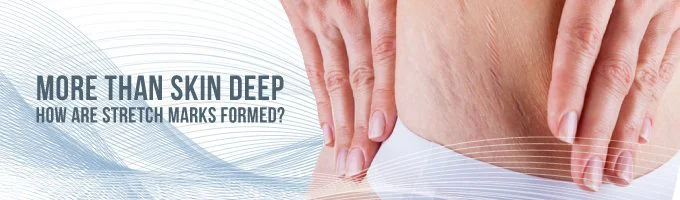
Stretch marks (striae) form when the dermis, the middle layer of skin, is stretched faster than its collagen and elastin fibres can adapt, causing them to break down. They are influenced by hormones, genetics and rapid changes in body size. Stretch marks can often be made less noticeable with treatment, but they cannot be completely removed.
What are stretch marks?
Stretch marks are linear marks in the skin that are, under the microscope, similar to a type of scar. They are very common, affect people of all genders, and are not harmful to your health.
Doctors call them striae distensae. Depending on the cause, you may also see the terms striae gravidarum (pregnancy) or striae rubrae and striae albae (red and white stretch marks). They most often appear on the abdomen, breasts, hips, thighs, buttocks, upper arms, lower back and around the armpits.
How do stretch marks form in the skin?
They form in the dermis, not the surface layer. When skin stretches quickly, or when hormones weaken its supporting fibres, collagen and elastin fibres break and the dermis thins.
Skin has three main layers:
- Epidermis: the thin outer layer.
- Dermis: the middle layer, which contains collagen for strength and elastin for recoil.
- Subcutaneous layer (hypodermis): fat and connective tissue underneath.
In a stretch mark, the collagen and elastin network in the dermis is damaged and reorganised in parallel bands, and the overlying epidermis becomes thinner and flatter. Early on, inflammation and small blood vessels give the marks a pink, red or purple colour. Over time the inflammation settles, and the marks usually fade to a paler, silvery or white colour that may sit slightly below the surrounding skin.
Why do some stretch marks look deep?
Stretch marks look deeper when the dermis beneath them has thinned more. Older, mature marks often look more sunken and have a different texture from the surrounding skin.
The difference between early and mature stretch marks matters for treatment:
| Feature | Early (red or purple) stretch marks | Mature (white or silver) stretch marks |
|---|---|---|
| Stage | Active inflammation, blood vessels still visible | Inflammation has settled; scar-like tissue |
| Texture | May be slightly raised or flat, sometimes itchy | Often flat or depressed, may look wrinkled |
| Colour | Pink, red, purple, or darker brown on deeper skin tones | Paler than surrounding skin |
| Response to treatment | Generally thought to respond better | Harder to improve; changes are usually more limited |
What causes stretch marks?
There is no single cause. Stretch marks result from a combination of mechanical stretching of the skin and factors that affect the skin’s structure, including hormones and genetics.
Common situations linked with stretch marks include:
- Pregnancy, particularly in the later months as the abdomen and breasts grow. Pregnancy hormones are thought to make connective tissue more likely to stretch and tear.
- Puberty growth spurts.
- Rapid weight gain, or large changes in weight.
- Rapid muscle gain, for example with weight training.
- Corticosteroids, either long-term oral use or prolonged use of strong steroid creams on the skin.
- Medical conditions that raise cortisol levels, such as Cushing’s syndrome, and some inherited connective tissue disorders, such as Marfan syndrome and Ehlers-Danlos syndrome.
Genetics plays a part, and research has linked stretch marks to genetic variants. A family history of stretch marks may mean you are more likely to develop them.
See your GP if stretch marks appear suddenly without an obvious reason such as pregnancy, growth or weight change, particularly if you also have weight gain around the trunk, a rounder face, easy bruising, muscle weakness or high blood pressure. These can be signs of a hormonal condition that needs investigation.
Can you prevent stretch marks?
There is no reliable way to prevent stretch marks, because genetics and hormones play such a big role. Some general steps may help reduce stretching of the skin.
- Aim for gradual, steady changes in weight where possible, and avoid repeated large swings.
- During pregnancy, follow your midwife’s or doctor’s advice on healthy weight gain.
- Eat a balanced diet and stay hydrated to support overall skin health.
- Use strong steroid creams only as directed by a doctor.
Moisturisers, oils and butters can ease dryness and itching of stretching skin. Evidence that they prevent stretch marks is limited and mixed, and massage has not been shown to stop them forming.
Can stretch marks be removed?
Stretch marks can often be improved, but not fully erased with non-surgical treatment. The only way to remove a stretch mark completely is to surgically remove the skin that contains it.
Some people choose to seek treatment for the appearance of stretch marks. Studies of the treatments below report varying degrees of improvement in colour and texture. Results differ from person to person and no outcome can be guaranteed. Combinations of treatments are often used.
- Micro-needling: fine needles create controlled micro-injuries to stimulate collagen. Possible side effects include redness, swelling, pinpoint bleeding, infection and pigment changes.
- Platelet rich plasma (PRP): a concentrate from your own blood applied or injected into the skin, often with micro-needling. Possible side effects include bruising, discomfort and infection at treatment sites.
- Fractional laser: creates tiny columns of heat in the skin to prompt remodelling. Possible side effects include redness, swelling, crusting, burns, and darkening or lightening of the skin, which is more likely on darker skin tones.
- VASER or laser skin tightening: heat delivered under the skin through small incisions to encourage tightening. This is a minimally invasive surgical procedure with risks including bruising, swelling, burns, numbness and contour irregularities.
- **Skin removal surgery (such as a tummy tuck):** removes the skin containing stretch marks, usually only below the belly button. It leaves a permanent scar and carries the risks of major surgery.
Newer marks may respond better, though results vary and no improvement can be guaranteed. Our stretch mark treatment options page explains how these are used at Cosmos Clinic.
If loose skin is part of your concern, read how to tighten loose skin after weight loss or pregnancy. If you are considering body contouring, whether liposuction or a tummy tuck suits a flat stomach goal compares the two.
Risks and considerations
All procedures carry risks. Results vary between individuals. Surgical and invasive procedures carry additional risks, including scarring, infection and anaesthetic risks.
Stretch mark treatments are not usually recommended during pregnancy, and some are not advised while breastfeeding. Treatments that use heat or lasers may carry a higher risk of pigment change on darker skin tones. Suitability is assessed in consultation. If surgery such as a tummy tuck is being considered, Australian requirements include a GP referral and a cooling-off period of at least 7 days before booking. Before proceeding, you should seek a second opinion from an appropriately qualified health practitioner.
Frequently asked questions
Do stretch marks go away on their own?
They usually fade from red or purple to a paler colour over time, but they rarely disappear completely.
Do men get stretch marks?
Yes. They commonly appear after growth spurts, weight changes or rapid muscle gain, often on the shoulders, upper arms, lower back and thighs.
Are stretch marks a sign of poor health?
Usually not. Most are linked to normal life changes. Unexplained widespread stretch marks with other symptoms should be checked by a GP.
Can tanning hide stretch marks?
Tanning can make them more noticeable, because stretch marks do not tan in the same way as surrounding skin. Sun protection is recommended.
Will losing weight remove stretch marks?
No. Weight loss may change how they look, but the damage in the dermis remains.
If stretch marks bother you, a consultation can help you understand which options may be suitable and what they can realistically achieve.
Disclaimer: This article is general information only and does not replace a medical consultation. All procedures carry risks, and surgical and invasive procedures carry additional risks. Results vary between individuals and no improvement can be guaranteed. Suitability, risks and recovery are discussed in detail during consultation with a qualified medical practitioner. Before proceeding, you should seek a second opinion from an appropriately qualified health practitioner.