Keto and Intermittent Fasting: Should You Combine the Two Diets?
Intermittent fasting and the keto diet have been the most talked about weight loss strategies of the year. Both have been recognised for their health benefits from fat loss to improved mental clarity.
But should the ketogenic diet and intermittent fasting be combined? And if you do both, will it speed up your weight loss and health goals?
Intermittent Fasting: The basics
Intermittent fasting (IF) simply refers to eating during a set period of time and fasting the remaining hours. There are different forms of intermittent fasting where the eating window is adjusted. The most popular and perhaps the easiest fasting method to execute is the 16/8. This means you have an 8-hour window to eat and you’re fasting for 16 hours.
The theory behind the intermittent fasting eating pattern is that you reduce your calorie intake and as a result, your insulin levels will begin to reduce and your ability to burn fat increases.
Why is reducing our insulin levels beneficial? When we consume food, mostly carbohydrates, we release insulin which alerts the body to store excess energy in the form of glycogen for use when we need it. Some of the glycogen stores will be in the liver, but more of it will become body fat.
To put it simply: the more insulin produced = the greater fat stores and as a result, an expanding our waistlines.
The idea behind fasting meal plans is that when our body has been in a fasted state for a certain period of time, it starts to tap into the fat stores and uses this as fuel.
The advantages of IF dieting may include:
- Reduced fat mass while maintaining muscle mass
- Improved metabolic health
- Reduced insulin resistance
- Stabilises blood sugar levels
- Boosted brain function
- Increased energy levels
- Easy to maintain long term
Ketogenic diet: The basics
The Ketogenic diet is not a new way of eating but certainly gained popularity around keto dieters, nutritionists and other health professionals over the last year or two.
Rather than focus on reduced calorie intake, the keto diet is based on low-carb and high-fat to put the body into a state of ketosis. This is where the body endogenously produces its own ketones and burns fat for fuel instead of using glucose as the glycogen stores are reduced. The body can become ketogenic after days of fasting or a week or two of low-carb dieting.
You can also induce ketosis exogenously when ketones are supplemented. The difference, however, is that your body isn’t producing ketones. Instead, the ketone levels in the blood are raised with supplementation such as medium-chain triglycerides (MCT oils) or ketone salts and esters.
The advantages of a ketogenic diet may include:
- Reduced body fat
- Improved appetite control
- Better diabetes control
- Improved cholesterol levels
- Improved metabolic health
- Improved mental clarity
Combining Keto and Intermittent Fasting
Both these popular dieting methods aim to produce the same goal and that is to encourage the body to use fat-burning for energy and deplete it of glucose.
There is little research that looks into the health benefits of high-fat, low-carb diets combined with intermittent fasting. However, many have found adopting both helpful in escalating their results. This is because fasting can help put the body it into ketosis sooner.
Another one of the benefits of intermittent fasting on a keto diet that is often discussed is the reduced symptoms of the “keto flu” as you enter ketosis faster.
A keto-friendly diet combined with defined feeding windows can also help people get out of their weight loss plateau. This is because you’re reducing your calorie intake and your appetite is well controlled.
While there may be benefits of combining both keto and intermittent fasting, it’s not easy. The macronutrient changes and calorie restriction coupled with the fasting schedule can be challenging. If you have a high workout load, using fat as a fuel source can also take some time to adjust to. On top of this, if it is not planned well, a ketogenic diet can lead to nutritional deficiencies and increase the load on organs such as the liver and kidneys.
Example of a Keto / Intermittent Fasting Hybrid Diet
What might an average day on a keto/fasting diet look like?
7:00 am: water with lemon
10:00 am: black coffee (option with coconut oil) or black tea
1:00 pm: salmon salad with avocado and olive oil dressing
3:30 pm: hard-boiled egg and cucumber
6:00 pm: grilled chicken with steamed green veggies
7:00 pm: herbal tea
The bottom line
There is no one perfect diet that suits everyone with each individual responding differently. Depending on your health status and your current diet, you may be able to achieve your health goals simply by restricting your carb intake or implementing a fasting schedule. Both diets have been shown to be effective on their own and combining them may not be better.
For some, restricting the intake of carbs or fasting alone may be overwhelming and challenging to maintain long-term. If you haven’t tried either diet, it might be worth trying one before you adopt both. Slowly introducing alternate day fasting may also be a helpful way to keep up the healthy habits long-term.
However, if you have reached a weight loss plateau or want to fast track your results, why not give the hybrid diet a go? Our tips for doing it successfully:
- Track your food intake to make sure you’re getting the right macronutrient balance and calorie intake.
- Measure your ketone levels to see if you’re actually getting into a state of ketosis.
- Start with a moderate fasting approach and slowly adjusting the eating window.
- Track your results. If you aren’t measuring, you’re guessing.
Don’t Sabotage Your Goals With These Healthy Festive Season Tips
The holiday season has started as we welcome the arrival of summer and the Christmas count down. Never-ending social events, flowing champagne and mince pies can railroad our healthy eating and lifestyle habits.
Whether you’re looking for weight loss, to maintain your cosmetic surgery results or to increase your fitness, follow these tips to avoid sabotaging your health goals.
Tips for keeping your health goals on track over the festive season
You’ve worked hard to keep in shape and you may even have invested time and money to contour your body through cosmetic surgery. Don’t let the excitement of the holiday season sway you from maintaining your hard work or achieving your results.
That being said, we don’t want to take the fun out of it.
Making a few healthy choices can help you stay on track and allow you to celebrate Christmas and the new year too.
- Listen to your hunger cues
Tuning in and listening to your body can help you avoid overeating, especially if you have a busy social calendar. Stick with your regular meals outside of the festive events and monitor your portion sizes. - Watch your liquid calorie intake
The calories can sneak up on you during the holiday season thanks to the free-flowing alcohol, festive smoothies and soft drinks. Limit your intake of alcohol and sugary drinks where you can to avoid empty calories. Perhaps stop your usual after-work drink or wine with dinner and reserve alcohol for the holiday parties and get-togethers. If you do want to indulge in some festive cheer, alternate your drinks with a glass of water. - Eat a healthy meal before parties
Filling up on healthy food including veggies, protein, complex carbs and healthy fats before you go to a Christmas party will help to prevent yourself from hoovering too many calorie-dense treats and cocktail snacks. These may look like innocent bite-sized pieces, but add them up and this can quickly lead to weight gain. - Choose quality over quantity
It’s the time of year to enjoy yourself with friends and family. Even if you’re aiming for weight loss or simply want to stick to your healthy habits, you should allow yourself to have fun this holiday season (even if that is eating a couple of serves of Christmas pudding!).
If you do love cheese or desserts, allow yourself to enjoy your favourites but stick with good quality whole foods rather than processed foods and watch your portion sizes. - Identify your weakness
Don’t rely on willpower alone. Identify your weakness (or weaknesses) so you’re prepared. If you have a weakness for chips or chocolate and can’t stop at just one or two, avoiding it altogether may be the best option. If there is a food that leaves you unsatisfied no matter how much you eat, it’s not the right food to indulge in if you want to meet your diet and fitness goals. - Keep active
Keeping up your physical activity regime and moving where possible will not only help keep your waistline under control but it will also help you manage your stress and maintain balanced energy levels. Remember, it’s much easier to continue working out than starting up again after a month of poor exercise and eating habits or two sitting on the beach doing nothing. If you’re struggling, investing in a personal trainer over the holiday season may help keep you accountable. And for those travelling away from the gym, there are plenty of online programs and apps you can do anywhere. - Manage your stress
This time of year is stressful for many. We’re snowed under with end of year deadlines, racing around doing Christmas shopping, spending time with family who we may not always get along with and on top of that, our purse strings are being stretched to the max. Practising techniques to keep your stress in check is just as important as dieting and exercising if you want to have a healthy holiday and meet your new year’s resolutions. When stressed we tend to overeat and Christmas conflicts tend to rise. Go to a yoga class, walk on the beach, read a book or simply spend 10 mins focusing on your breath.
How to Maintain Your Brazilian Butt Lift Results Long Term
The Brazilian Butt Lift procedure is an effective way to increase the size and enhance the shape of your butt. As the cosmetic surgery procedure utilises your own fat cells to increase the volume, you’ll also benefit from body contouring thanks to the liposuction techniques used.
The true result of your BBL can be seen in about 6 weeks, but what about the long term? To keep your new, contoured shape and perky, full bottom, you’ll need to adopt a few good habits.
Focus on your post-operative care first
Before you think about dieting and your exercise routine, your BBL recovery starts with focusing on post-operative care. The final results and the long term effectiveness of the Brazilian Butt Lift surgery rely greatly on your ability to follow the care instructions during your recovery period. This includes wearing your compression garment, restricted sitting and attending the lymphatic drainage massages.
Find out the answers to common BBL recovery questions here.
Wait for 4-6 weeks until working out
While you may be keen to put on your activewear and show off your new booty in the gym, it’s important for BBL and liposuction patients to wait 4-6 weeks before working out. This allows time for the fat cells to stabilise and establish optimal blood supply after the fat transfer. Exercising can compromise the transferred fat and in turn, your final results. So take the time and enjoy a little R&R while you can!
Explore our exercising after BBL surgery tips here.
Maintain a stable weight
Once you’ve healed from the Brazilian Butt Lift surgery and given the green light from your cosmetic or plastic surgeon to return to your usual activities, maintaining a stable weight is key. Liposuction is effective at long-lasting fat removal results. However, gaining and losing body fat in the surrounding areas could affect your overall results. A healthy diet and regular exercise is the best way to keep your weight stable and maintain your liposuction and butt augmentation long term.
Keep hydrated
Hydration is often overlooked when it comes to keeping up the results of liposuction or BBL surgery. During the recovery period, keeping hydrated helps aid the healing process including minimising scarring and reducing swelling, but why is it important long term? Staying hydrated aids the digestive process, it helps maintain a healthy metabolic rate and allows greater control over your hunger levels.
Build your legs and gluteal muscles
When you are cleared for exercise, targeting your legs and gluteal muscles in your workout can help maintain your Brazilian Butt Lift results, keeping your butt perky and full. With the assistance of a trainer, you may wish to incorporate squats, deadlifts, lunges and box jumps into your regular regime. If this is new to you, starting with little-to-no weight and focusing on your form is best. You can then add weight as you feel more confident and gain strength. These exercises will help to tone your entire posterior chain and ultimately help you maintain your body contouring results.
Are Non-surgical Nose Jobs Too Good To Be True?
Is a large bridge, unsymmetrical or crooked nose dampening your confidence?
Well, the good news is, you may not have to put up with it for much longer or go under the knife. Non-surgical nose jobs are a great solution for those looking for minor reshaping and minimal downtime.
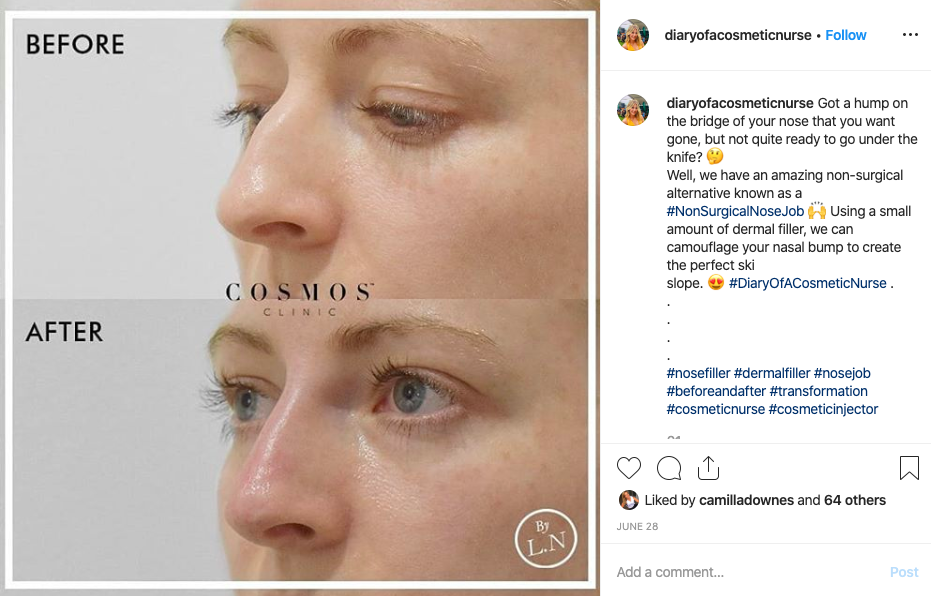
A rhinoplasty is a cosmetic procedure that effectively alters the shape of the nose and in the process correcting balance and enhancing the patient’s overall facial features. Carried out by an experienced facial plastic surgeon, a traditional rhinoplasty is performed under general anaesthetic in a hospital setting. The plastic surgery takes 1-2 hours and the patient can expect to return to work within 7-10 days after downtime, however, the bruising and swelling persist for several weeks.
As with any plastic surgery, there are also side effects to consider.
But what if you don’t want to undergo an invasive cosmetic procedure? Do you simply have to remain self-conscious or is there a non-surgical procedure alternative?
Non-surgical rhinoplasty gives patients more options
Thankfully, non-surgical nose reshaping that uses dermal fillers is giving people the option beyond a traditional rhinoplasty. Not only do you avoid going under the knife, but the procedure is also relatively quick to perform and the recovery time minimal. You could even schedule your appointment in your lunchbreak!
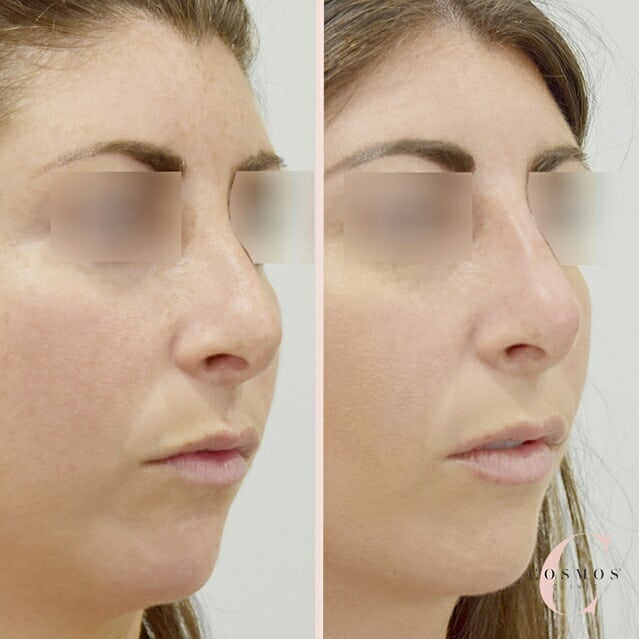
In some cases, by using just a small amount of injectable dermal fillers can dramatically transform the appearance of a patient’s nose as you can see from our before and after photos.
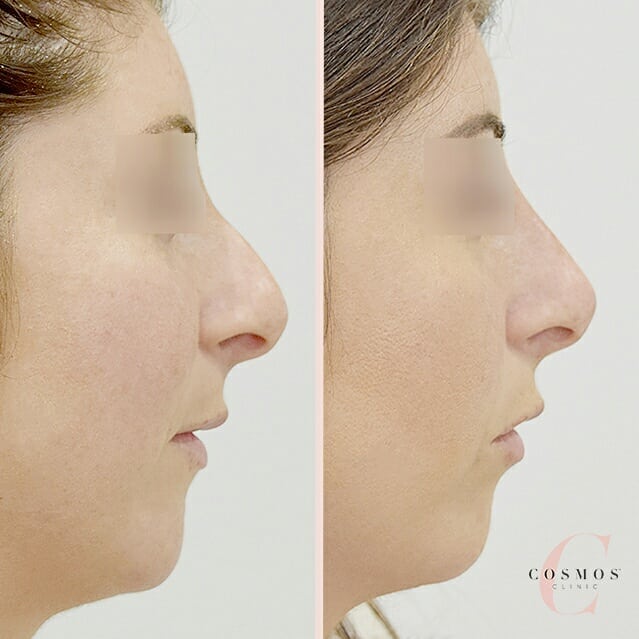
Our Cosmetic Nurse Injector, Laura Naughton, has mastered the art of using dermal fillers for contouring areas of the nose. Using injectables, she can fill in depressed areas of the nose to smooth out the appearance of large bumps and bridges. Dermal fillers can also be used to alter the angle of the nose tip, reducing the appearance of the nose size and enhancing the shape.
The overall results are incredibly natural too and avoid the plastic or fake look.
Why should I consider a non-surgical nose job?
Non-surgical nose jobs are suitable for correcting minor abnormalities that don’t require invasive plastic surgery. These may include:
- Flat bridge correction: Dermal Fillers can be used to create a subtle increase in height
- Symmetry correction: Slightly crooked or off-centre nose
- Camouflage: A bump or hook on the bridge of the nose
- Create Balance: The size of the nose in comparison with other facial features
- Shape refinement: Following surgical rhinoplasty
What type of fillers are used?
There are a wide range of dermal fillers used in cosmetic procedures including the lips, cheeks, chin and nose. The most common fillers are composed of natural sugar, known as hyaluronic acid that is present in the body with the highest concentrations found in the fluids of our joints and eyes.
As we age, there is a gradual loss of hyaluronic acid which can result in sagging and wrinkles. By using it as an injectable, the hyaluronic acid adds volume to the skin helping to smooth out lines or enhance areas such as the lips, jawline, cheeks or in this case, non-surgical nose jobs.
As a natural substance, it’s compatible with the body and reduces the risk of rejection which makes it a very safe and relatively simple cosmetic surgery procedure to perform.
How permanent is a non-surgical nose job?
As a natural, soluble product is used in the procedure, the results of a non-surgical rhinoplasty using dermal fillers aren’t permanent. They tend to last about 18-24 months.
Some cosmetic surgery clinics offer permanent filler options. While FDA approved, these permanent liquid nose fillers remain in the body forever with the inability to break them down. This means that should too much be permanent filler be injected, the product can’t be dissolved and the area can’t be corrected. Hyaluronic acid fillers, on the other hand, can be dissolved should the cosmetic nurse need to alter the amount used or position in order to achieve the desired results.
And should you fall in love with your enlarged bridge again years down the track, you won’t be living in regret.
Exercise ‘Snacks’: The Workout Solution For Time Poor People
“I don’t have time” is probably one of the most common excuses people use for skipping their exercise session. This time of year as we race to the finish line before the Christmas and New Year’s festivities begin everyone is feeling a little extra time-poor.
But could exercise ‘snacks’ be the answer for keeping fit, losing bodyweight and keeping healthy?
Exercise ‘Snacks’ are changing the way people workout
Whether your goal is weight loss, to increase muscle size, to maintain your liposuction results or looking after your heart health, we all know consistent physical activity is key to achieving these goals. Yet, getting to the gym for 45 minutes of resistance exercises or going for an hour-long run simply isn’t feasible every day in our busy schedules.
But what if you could lose weight and gain fitness by doing just a snack-sized portion of exercise on the days you simply can’t do your usual treadmill run or boxing class?
Exercise snacking refers to going just 20 seconds of exercise several times a day and research shows it can lead to measurable health and fitness benefits.
Yes, you heard right.
Simply sprinting up a few flights of stairs during your lunch break, or doing a set of lunges followed push-ups a few times a day could actually improve your health. Now, you might not feel so guilty if you couldn’t squeeze in your evening high-intensity interval training (HIIT) session after a long day at the office.
Study finds 20-second exercise snacking improves aerobic fitness
12 participants leading sedentary lifestyles participated in a 6-week study published in the journal Applied Physiology, Nutrition, and Metabolism.
They were asked to sprint up a 60-step flight of stairs which took about 20 seconds, three times a day. They had a 1-4 hour break between each 20-second exercise ‘snack’ – plenty of time to catch your breath!
Before each set, they were giving a warm-up that consisted of five lunges on each leg, 10 jumping Jacks and 10 air squats before a 1-minute walking cool down.
After just six weeks, the participants had a significant 5 percent increase in their aerobic fitness measures when compared to a control group of 12 sedentary individuals.
Short bursts of exercise may effectively reduce blood sugar levels
An earlier study also found health benefits in short bursts of physical activity (around 12 minutes each). Published in the Diabetologia journal, the study found participating in three short exercise sessions was more effective in reducing blood sugar levels than one 30-minute workout.
Not only is it more time-efficient, but the results suggest this can also can help exercisers to improve their glycaemic control in people with blood sugar dysregulation or insulin resistance.
As we head into one of the busiest times of the year, maybe you don’t have an extra hour to get to your usual gym weight training session. But, I bet throughout your day you could find two or three 15-minute gaps to squeeze in a bit of HIIT exercise.
Try running up and down your office stairs. Grab a colleague and go into the park for a few sets of resistance exercises or pack a skipping rope in your bag for a pre-lunch jump.
You don’t need a whole lot of commitment to enjoy the benefits of exercise snacking. Just get moving, get your heart rate up and take part in these effective workouts.
Is Insulin Resistance Hindering Your Weight Loss?
Insulin resistance is a term often associated with type 1 or type 2 diabetes, but could it be the reason you’re not seeing the number on the scales go down?
Insulin resistance is a metabolic imbalance that is often overlooked as a key contributing factor of weight gain and preventing weight loss. So if you’ve made healthy lifestyle changes and still not seeing the weight fall off, understanding more about insulin levels and blood glucose control could help you reach your weight loss goals.
Insulin: the basics
First, let’s start with the basics. Insulin is a growth hormone that is made by the pancreas when you eat or during your stress response. It’s a normal response to an increase in your blood sugar (glucose) levels which allows the glucose to be used by your cells for energy.
Ideally, your body will produce the same amount of insulin as the amount of glucose in your body. By matching the levels, your body is able to keep your blood sugar levels balanced and your energy stable.
Carbohydrates drive the largest production of insulin to help ensure your blood sugar levels don’t get out of control. High stress also does the same. Protein-rich foods only elicit a small amount of insulin release. And dietary fats don’t affect the insulin response.
Insulin resistance: how it works
Insulin is essential to keep our blood sugar levels in check but it’s when we have too much circulating insulin that there is a problem.
Large fluctuations in insulin or constantly high insulin production causes the receptors of your pancreas cells to stop responding effectively. Your body then has to make more and more insulin to help you avoid high blood sugar levels. This is what is known as insulin resistance.
When you have high levels of insulin and your cells are unable to absorb the glucose, your level stores it as body fat. So not only is your pancreas tiring and your blood sugar levels are out of control, you’re experiencing weight gain.
More often than not, these fluctuations of insulin are associated with dietary choices, but stress and physical activity can also play a role.
Am I insulin resistant?
It’s not uncommon for people to be insulin resistant for years and don’t even know. That’s because there are not a lot of noticeable signs and symptoms. It’s well-known insulin resistance is associated with medical conditions including high blood pressure, high cholesterol, high triglycerides and metabolic syndrome.
If you have been consuming a heavily processed diet with lots of refined carbs, chances are you will be experiencing blood sugar imbalances, if not insulin resistance.
If you’re overweight, particularly with a generous amount of belly fat, you are at a higher risk of being or becoming insulin resistant.
Darkening and thickening of the skin can be an indication you’re insulin resistant.
Insulin resistance may also play a key role in the development of female reproductive abnormalities such as polycystic ovary syndrome (PCOS).
How can I maintain healthy insulin levels?
If you suspect you might be insulin resistant or experience blood sugar fluctuations throughout the day, there are some healthy eating and lifestyle habits that can help keep the negative effects of insulin imbalance at bay.
- Eat a diet of whole foods
Ditch the packaged and processed foods to reduce your intake of highly refined carbs and trans fats. Focus on whole foods in their most natural state to help prevent large spikes in your blood sugar and trigger the release of more insulin. - Consider fasting
Intermittent fasting may not only help you normalise your blood glucose levels but also help you achieve a healthy weight. The theory is that it helps to reduce your insulin levels and essentially allows your body to reset itself. Having an eating window also helps to prevent overeating. - Make reducing your stress a priority
Your blood sugar levels increase when you’re stressed due to the release of the hormone adrenaline. This process is to help provide you with more energy so you can fight or flee from danger. Too much stress results in blood glucose imbalances so incorporating relaxation activities into your daily life will help prevent insulin resistance and weight gain. - Get moving more often
Exercise, particularly an increase of muscle mass, helps improve your insulin sensitivity, meaning your pancreas will make less insulin and your overall levels will decrease. There will be reduced insulin need to transport the glucose to your cells and less fat storage causing weight gain. - Get a good nights sleep
Lack of sleep not only affects your blood sugar regulation but it also leads to poor food choices, overeating and cravings. You’re also less likely to exercise and more likely to be stressed. All of this coupled together, it’s no wonder your body weight increases.
The Dos and Don’ts of Dermal Filler Treatments
With Christmas quickly approaching and warm weather knocking at our door many people are considering dermal fillers as a way to appear fresh-faced and full-lipped this summer.
The rise in popularity of dermal fillers
Injectables and filler treatments are gaining popularity especially amongst celebrities, models and social media influencers.
Why?
Because dermal fillers help to restore volume loss in the skin, fending off wrinkles and fine lines in the process. Filler treatments also aren’t just limited to plumping up lips and smoothing out foreheads.
They can be used to treat fine lines around the mouth and eyes or to give shape and definition to injected areas such as cheeks, chins and jawlines. Performed by an experienced cosmetic injector, dermal fillers can effectively enhance your facial features to provide you with a beautiful, natural look with minimal to no side effects.
But what are the dos and don’ts of filler treatments?
You’ve no doubt seen pictures of celebrities after a heavy dose of Botulinum leaves them with a pillow-like, distorted appearance. Unfortunately, these women and men are the victims of unqualified or inexperienced people offering dermal filler treatments or have seen the incredible effects of injectables and gone one step too far.
To avoid this, here we list the top do’s and don’ts when it comes to dermal filler cosmetic procedures and facial rejuvenation…
DO…
- Seek treatment with a qualified practitioner
Whether it’s your first time getting lip fillers or you’re a frequent flyer, ensure you seek the treatment with a qualified and experienced expert. In the wrong hands, dermal fillers can be injected into the wrong areas of the face, the incorrect filler used or too much filler injected. - Ask for before and after photos of filler procedure clients
When consulting with a nurse injector, dermatologist or plastic surgeon who offer filler procedures, ask to see before and after photos. This will give you a visual understanding of the work they do and allow you to ascertain if it aligns with your facial rejuvenation expectations. - Discuss the type of fillers used
There are a variety of dermal fillers on the market, both natural and synthetic, including Restylane, Juvederm and Aquamed just to name a few. We advise using a natural dermal filler that contains hyaluronic acid as this can be reversed versus semi-permanent synthetic fillers that remains in your body. - Follow the post-treatment aftercare advice
Your cosmetic practitioner will provide you with post-treatment aftercare advice that’s important for you to follow to support the healing process and minimise side effects. Placing ice on the treated areas and drinking plenty of water, for example, can help reduce the swelling. Using skincare products containing Arnica can also help minimise the bruising during the healing process. - Plan your filler injections in advance
If you’re considering dermal filler skin treatments before a big event like Christmas or a wedding, plan a month or two in advance. This gives you time to find the right cosmetic injector and time for your treated areas to heal before the big day.
DON’T..
- Get dermal fillers at an injectable party
Injectable parties are often performed by unqualified injectors and in unsanitary environments. This can result in complications or side effects, leaving you disappointed and embarrassed with the results. It’s also not uncommon for people to be enjoying themselves a little too much before, during and after the party. It’s advised not to drink alcohol at least 24 hours before and after the cosmetic procedure due to the blood-thinning and dehydration effects. - Go too far and overfill the injection site
Set realistic expectations and aim to enhance your natural facial features rather than overfill and create a fake look. Multiple smaller dermal filler treatments may result in a better outcome than larger filler treatments all in one consult. - Undergo filler treatment when pregnant
As with most cosmetic procedures, dermal fillers should not be injected while pregnant or breastfeeding. - Take over-the-counter pain medications before the procedure
It is advised to avoid taking over-the-counter pain relievers such as Ibuprofen, Aleve, Aspirin leading up to your dermal filler appointment due to the blood-thinning effects. If you are taking medications, please discuss these with your chosen injector. - Participate in strenuous exercise after injectable fillers
Strenuous exercise right before and in the days after your injectable fillers can compromise your results and delay the healing process by causing further swelling and bruising.
Is it Easier For Men to Lose Weight?
Ever notice the before and after photos of a weight loss challenge where the men looked ripped and the women have less noticeable results? Is it just that men are more compliant with their diet and push harder at the gym or is there some truth in the rumour that men lose body fat more easily than women?
Is it easier for men to lose weight?
Sorry ladies, it’s true. Men do typically lose weight faster than women but it may not count for much in the scheme of things.
A study published in the journal Diabetes, Obesity and Metabolism following 2,000 prediabetic overweight adults throughout Australia, New Zealand and Europe found men do lose body fat differently than women.
Over eight weeks, the participants followed a low-calorie diet consuming 800 calories a day. This consisted predominately in the form of soups, shakes and low-calorie vegetables such as lettuce, tomatoes and cucumbers.
- At the two months mark, 35% of men and women recorded normal blood glucose levels and were no longer deemed prediabetic.
- Men lost an average of 11.8 kilograms body fat compared to the 10.2 kilograms the women lost.
But it wasn’t just weight loss that resulted in larger reductions for men than women. Men also faired better in other clinical measures including lower heart rate, greater visceral fat loss and a decreased risk of type 2 diabetes and metabolic syndrome (including symptoms such as high blood pressure and BMI).
While women did notice a reduction in body fat and experienced a greater drop in centimetres off their hips than men during the 8-week weight-loss program, there were some other results that weren’t optimal.
There was a greater reduction in bone mineral density and lean body mass in women. This indicates weaker bones which are particularly problematic as women age and overall less muscle mass. There was also a greater reduction in HDL “good cholesterol” than men which can be a risk of heart disease.
Why it’s easier for men to lose weight faster than women
More testosterone
Men have greater testosterone levels whereas women have more oestrogen. This helps men to build greater lean body mass compared to women. The extra oestrogen hormone women make encourages greater fat around the hips.
Greater lean muscle mass
Greater lean muscle mass enables men to burn more calories throughout the day due to the higher resting metabolic rate which results in more weight loss. This is why the caloric intake recommendations are higher for men than they are for women whether that’s for weight loss of maintenance.
Different weight distribution
The study identified men typically holding more visceral fat around their midsection. This is the concerning fat that surrounds internal organs. When these fat stores are lost it results in higher metabolic rate and they are able to burn more calories.
Women tend to carry more body fat around their hips, thighs and bottom in the form of subcutaneous fat. Because subcutaneous fat isn’t metabolically active, this doesn’t result in any change to their metabolic rate or risk factors.
Larger fat stores
From an evolutionary perspective, women generally maintain more body fat on average than men from puberty right through to menopause. This is greatly due to the adaptions required for childbearing.
Results more noticeable
In short-term weight loss programs, men tend to lose belly fat reasonably quickly compared to women whose fat loss is typically more spread out. This is why men’s challenge progression photos are often more dramatic than women’s.
Weight loss is challenging regardless of your gender
While it might be frustrating to see your male counterpart losing weight more quickly, especially initially, it’s important to remember weight loss is tough regardless of your gender.
This study has its limitations, only focusing on short-term small changes. It didn’t track whether the weight loss evened out over time or which gender was able to maintain it long term.
Remember, weight loss is never linear.
Some weeks you’ll lose weight and others you may see no change on the scale or a slight bit of weight gain. It’s also worth keeping in mind, it’s not all about the number. Photographs, waist-to-hip measurements and your gains at the gym whether that’s the increase in weight you can lift or your time around the running track, are all important measures to consider.
Are Your Sleep Habits Affecting Your Skin?
Is the term “beauty sleep” really true? Does sleep deprivation lead to dark circles under the eyes, breakouts and fine lines?
Yes! Your sleep habits can have a profound impact on the quality of your skin and premature ageing. On top of cleansers, exfoliants and anti-ageing moisturizers, getting a good night’s sleep really should be a key component of your skincare routine. Here’s why:
A lack of sleep could have damaging effects on your skin
Is sleep deprivation the cause of your dull complexion and ageing skin?
While there are many reasons for compromised skin health including diet, dehydration and sun exposure, the importance of getting adequate hours of sleep every night is often underestimated.
If you’ve shaken off the comment “oh, you look tired” once or twice, you may be covering up the dreaded under-eye bags with a layer of foundation or hoping your puffiness subsides after you drink some water.
Just one or two night’s of sleep deprivation can have an effect on your facial appearance. But what happens when you continually experience a lack of sleep?
When you don’t get enough sleep, your body makes more of the stress hormone cortisol. This can increase inflammation in the body leading to unpleasant breakouts and irritate skin conditions like acne, eczema or psoriasis. The rise in cortisol levels can also increase the breakdown of collagen which is essential for youthful skin quality, glow and elasticity.
A lack of sleep also reduces the production of your growth hormones that are integral to the repair of damaged cells. Over time this accelerates skin ageing and weakens its ability to restore the skin to maintain a youthful appearance. Those who don’t get enough ZZZ’s may find themselves with uneven skin tone, an increased presence of fine lines and reduced skin elasticity. Your skin’s ability to recover from skin stressors such as sunburn is also reduced.
Are you suffering from pigmentation, acne scars or broken capillaries? Take a look at our non-surgical and surgical skin treatments here.
Whether you get a good night’s sleep or experience poor sleep, your body loses a little bit of water through exhalation and sweat. You may have noticed this when stepping on the scales in the morning.
However, you can actually have greater levels of dehydration when you experience even minor sleep deprivation. This can lead to dry skin and imbalances in its pH levels. This stimulates the inflammatory response heightening redness, causing the blood vessels to dilate and increasing the puffiness and breakouts.
How to incorporate a good night’s sleep into your skincare routine
Getting consistently adequate shuteye can help to improve your skin’s appearance and recover from the damage occurred during the day. This is mainly due to the release of the sleep hormone melatonin which allows for the repair of cells and DNA damage while you are in a deep sleep. Keeping your cortisol in check and maintaining healthy growth hormone production will also benefit your skin.
To set your self up for better sleep and therefore better skin, try these tips:
- Keep the room temperature cool
- Make it as dark as possible
- Keep hydrated throughout the day
- Remove any devices out of the room
- Avoid eating a big meal before bedtime
- Refrain from using electronics 1 hour before bed
Am I a Good Candidate For a Brazilian Butt Lift?
Feeling like your buttocks is lacking in size or shape? Notice its sagging with age and less perky than your younger years? Maybe you’ve just been inspired after watching our mini-series “From BOTCHED to BOOTY-FUL”?
We hear you. These are just some of the reasons women and men frequently enquire about the Brazilian Butt Lift (BBL).
BBL cosmetic surgery is an effective way to increase the amount of fat in your buttocks as well as perform body contouring to enhance your overall lower body shape. By using a patient’s own fat, not only can a BBL address the lack in size or shape, but it can also help to remove some of the excess fat you’ve been carrying around and shape your figure.
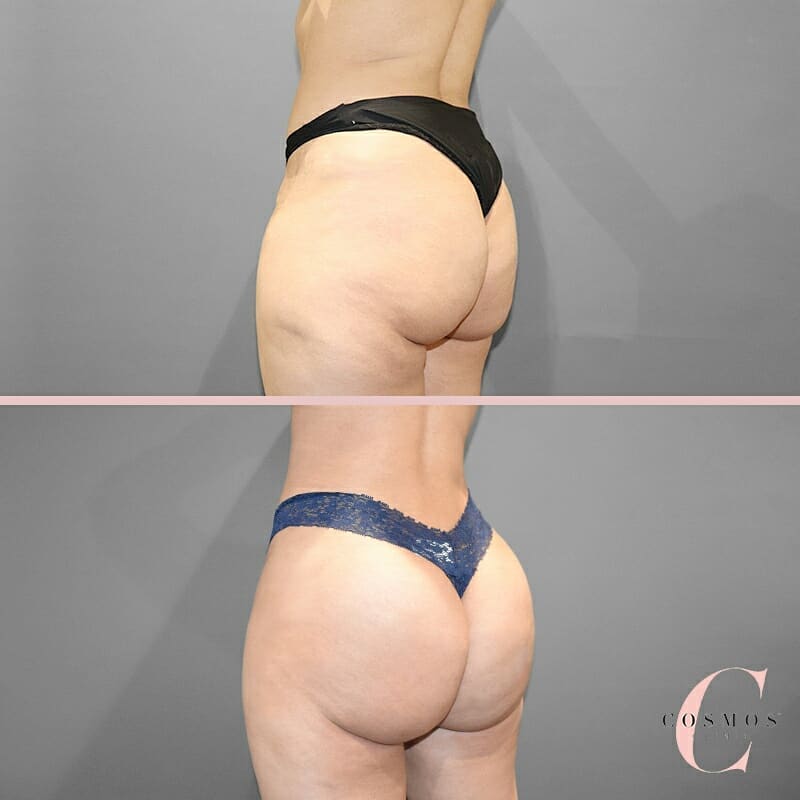
But what makes a good candidate for the butt augmentation procedure?
Contrary to popular opinion, a BBL good candidate isn’t just about wanting the final results to mimic the curvaceous Kim Kardashian or Beyonce butt. What’s more important is creating a buttock that is in proportion and enhances your body shape, while ensuring your health and wellbeing isn’t compromised.
Who is a good candidate for a Brazilian Butt Lift
Here we share with you 11 factors that may help to determine whether you are an ideal candidate for Brazilian Butt Lift surgery.
- You believe your buttocks needs more shape and definition.
- You are open-minded and willing to take on the advice of your cosmetic or plastic surgeon as to what is achievable and suitable for your individual proportions and body type.
- You have excess fat in other areas of your body; namely the abdomen, thighs, love handles and lower back, for the fat transfer. If not, you are committed to gaining excess weight in a healthy manner to have enough fat to be extracted via Liposuction.
- You have good skin integrity with some, but not excessive, sagging in the lower buttocks area.
- You are in good health with no existing medical conditions that could interfere or be worsened by the surgical procedure.
- You have realistic expectations of what can be achieved with a BBL procedure and the risks involved.
- You are committed to wearing compression garments, however unattractive, and attending the follow-up and lymphatic drainages to ensure optimal recovery and results.
- You understand the BBL can help to enhance your appearance and increase your confidence, but won’t turn your life around or fix all of your insecurities.
- You are a nonsmoker or willing to quit several months for your buttock augmentation to reduce surgical complications and improve your recovery.
- You are willing to refrain from drinking alcohol in the weeks leading up to your BBL to avoid complications in surgery and post-op.
- You have tried unsuccessfully to add volume and a shapelier contour to your buttocks through diet and exercise.
Sounds like you are a good candidate for the Brazilian Butt Lift procedure?
At your initial consultation with the Cosmos Clinic team, the above criteria will be discussed in addition to the BBL surgery itself. Together, your goals will be discussed to ensure your expectations are realistic for the type of procedure and that you’re an ideal candidate. You can find out more about BBL cosmetic surgery here.