Will I Have Loose Skin after Liposuction?
Liposuction is an effective cosmetic procedure to remove stubborn deposits of fat from areas such as the abdomen, love handles and inner thighs. But, what about the quality of your skin post-surgery?
A lot of people want to know if removing the excess fat cells will leave them with loose, sagging skin.
The quality of your skin may impact your results
Skin contraction after liposuction is unpredictable and will vary from person to person. Your skin will naturally contract after liposuction to some degree thanks to the skin’s natural healing process and its elasticity.
Generally speaking, those with good skin elasticity will have smooth and natural results after fat removal. Those with poor skin elasticity, on the other hand, may experience some wrinkling of the skin or looseness after the liposuction procedure.
Skin elasticity can be affected by:
- Genetics
- Age
- Sun damage
- Stress
- Repeated stretching of the skin
- Rapid and great weight loss
- Rapid and great weight gain
- Dehydration
- Poor diet
Wrinkled skin, visible stretch marks and cellulite can be an indication your skin laxity has been compromised to some degree.
What’s important to remember is that your skin quality will continue to improve over time as your body heals and the swelling subsides.
The cosmetic surgery techniques used will influence your skin quality
Liposuction is essentially a contouring procedure that can dramatically improve the appearance of your overall shape while removing excess fat cells that have proved hard to get rid of through exercise and a healthy diet.
Most liposuction techniques will naturally encourage the skin to retract after removing heavy fat deposits in areas such as the abdomen. By following the instructions of your cosmetic or plastic surgeon and wearing the compression garment you’ll be helping stimulate the natural healing process and gaining a better outcome.
At Cosmos Clinic, we now are using the latest technology alongside Vaser Liposuction to improve skin tightening and its overall appearance. skin tightening/J-Plasma is the newest FDA-approved treatment that will help rid any concerns you have over the look of your skin after liposuction.
Using a combination of plasma and radiofrequency energy, skin tightening helps to enhance skin laxity.
- The skin tightening device targets the skin’s tough outer layer to reduce visible irregularities such as sun damage, discolouration and signs of aging.
- The plasma energy and gentle heat produced is distributed deep in the skin’s subdermal layer to stimulate the production of collagen which helps give the skin structure.
This latest treatment is highly suitable for areas such as the upper arms, inner thighs and tummy where the skin is somewhat thin or lacks elasticity. Loose, sagging skin after cosmetic or plastic surgery may be minimised simply be the liposuction techniques used by your chosen clinic.
You can find more about skin tightening and whether you’re a good candidate here.
Cosmetic procedures that treat sagging skin
The final results of your liposuction treatment may not take place until months after your surgical procedure. Loose, sagging skin almost always continues to retract during your recovery time and the following months and sometimes years. Liposuction itself generally doesn’t cause the skin to appear more wrinkled.
In the event, there is no skin elasticity prior to your surgery or your skin doesn’t bounce back, there are cosmetic procedures that can treat sagging skin or large skin folds.
For example, if you had liposuction to remove a lot of excess fat from your abdomen, you could follow up with a Tummy Tuck procedure if you have a great deal of excess skin or large overhangs. This procedure isn’t going to tighten loose skin, rather remove the excess skin you’ve gained from carrying around a large amount of fat for an extended period.
For those removing stubborn pockets of fat from the back or thighs, but struggle with excess sagging skin around the buttocks, you have the option to undergo a Brazilian Butt Lift to give more volume and perkiness to the area.
To find out more about liposuction surgery, explore the procedure here. You can discuss your skin quality concerns with the Cosmos Clinic team on 1300-138-797 or at [email protected].
I’ve Cut the Calories But I’m Still Not Losing Weight
Losing body fat isn’t easy. Our bodies and minds are complex making weight loss more than just a ‘calories in and calories out’ equation. So if you’ve maintained a calorie deficit and not seeing the results translate on the scale, you may need to take a look at your approach.
When your low-calorie diet is translating on the scales
To start weight loss, you need to reduce your calories by about 500 per day. You may easily be able to achieve this by reducing your intake of refined carbs, cutting out soft drinks or watching your portion sizes. Combined with regular physical activity, a calorie deficit diet can result in fat loss. However, there are many factors in play that could be preventing weight loss.
Here are a few reasons why you might not be losing weight after cutting down your calorie intake.
1. You’re not eating enough calories
Yes, you read right. You may not be losing weight because you’re not eating enough. Your body requires a certain number of calories to perform. Eating too little impairs the body’s ability to function optimally.
Severely restricting your calorie intake can encourage fat loss in the short term but long-term it can results in muscle loss, slows your metabolic rate and lowers your body’s set point. Your body then adapts to this set point, requiring you to restrict your calories further to gain results otherwise you may find yourself in a weight loss plateau. This is one reason why most people experience weight gain after dieting.
2. Your diet is lacking nutrients
Adopting a low-calorie diet can result in a reduced intake of vital nutrients your body needs to function. They may not be directly hindering your weight loss, but it can lead to deficiencies. Some of the most common nutrient deficiencies caused by calorie-restrictive diets include protein, B vitamins, calcium and magnesium.
If sustained for too long, this can disrupt your body’s ability to digest food optimally, impair the detoxification pathways or cause a disruption in hormones – all of which can impair weight loss.
A diet can be both nutrient-poor and low-calorie. Ensuring your diet is balanced and nutrient-rich is going to help not only support your weight loss goals but also your overall health and wellbeing.
3. You’re stressed out
For some people, when they’re stressed, they lose weight quickly. For other’s the ‘fight or flight’ response and the increase in cortisol encourages their body to hold onto fat as a means of survival. After all, in a stressed-out state, your body doesn’t know when it is going to eat again.
Chronic stress also impairs digestion, disrupts sleep, leads to adrenal depletion, promotes sweet cravings and increases your food intake. All of which will make weight loss difficult.
4. You’re not being patient
So you’ve been on your low-calorie diet for 1 week. And your gym membership is seeing more use in the last month than it has in the year as you’ve increased your cardio sessions and bodyweight exercises. But there isn’t a change on the scale or you’ve noticed you’ve actually gained weight!
Unfortunately, you can’t force fat loss. Remember, you didn’t gain weight overnight so you’re not going to get in shape after being good for a week or two. Don’t let the slow process deter you from your weight loss efforts. Stick with it, even if you see fast results and then you plateau. Make sure you’ve addressed the other reasons why your weight loss may have stopped and give it more time.
Finally, aggressive dieting with severe restriction doesn’t work because it’s not sustainable long term and it doesn’t encourage you to build healthy habits that will enable you to maintain the weight loss.
How to Minimise Swelling After Cosmetic Surgery
Swelling is a normal part of the healing process following any cosmetic or plastic surgery procedures. It’s unavoidable, but there are some things you can do to minimise the swelling and improve your recovery time post-surgery.
Why swelling occurs after cosmetic procedures
Swelling after a cosmetic surgery procedure should be expected and is unavoidable during your recovery period. It’s your body’s natural reaction to an injury happens to the tissue and occurs when the inflammatory process is triggered.
Some swelling may also occur as a side effect of the anaesthesia if used during the procedure.
Many general anaesthetics used in surgery, whether it’s medical or cosmetic procedures such as a facelift, cause dilation of blood vessels and result in an increased amount of fluid building up in the surrounding tissue.
Swelling can present in varying degrees depending on the procedure. It’s also not uncommon to experience differential swelling during your recovery time where one of the treated sides appears more swollen than the other.
How long will the swelling occur?
The swelling will be noticeable immediately after the cosmetic or plastic surgeon has completed the procedure and is at its worst during the initial few days post-op. You may notice some relief in the swelling, one-week post-surgery but this will depend on the procedure.
In the Cosmos Clinic Instagram DM of the week, Dr Joseph Ajaka discusses the swelling after a BBL and shows a patients swelling results after one week. Watch below:
Approximately 75 per cent of the swelling will dissipate by week two of your recovery period. By week six, it’s estimated about 90 per cent of the swelling will be gone. It’s at this time you’ll begin to see the true results of your cosmetic procedure.
In addition to the swelling, most patients will experience bruising after a surgical or cosmetic procedure. Bruising will be most visible in the first few days post-surgery. For three to four days it’s natural to expect dark purple/blue bruises which will lighten by day five or six. Bruising typically resolves completely two weeks post-surgery.
Common cosmetic treatments you can expect swelling
Some of the common cosmetic and plastic surgery treatments you can expect swelling are:
- Brazilian Butt Lift (BBL)
- Liposuction
- Breast Augmentation
- Breast Reduction
- Abdominoplasty (tummy tuck)
- Facelift
- Rhinoplasty (nose argumentation)
How to minimise swelling after cosmetic surgery
While swelling and bruising may be unavoidable in most cases, there are some things you can do to reduce its appearance. In addition to these tips, it’s crucial to your overall recovery that you follow the post-operative care instructions from your cosmetic or plastic surgeon.
- Take time to rest
During your recovery period, it’s important you take the time to rest. This allows your body to direct its energy and focus towards the healing process. Refrain from any intense physical activity and exercise, especially in the first weeks of recovery as instructed by your surgeon. - Wear your compression garments
If you are given a compression garment after your procedure, make sure you wear it! Compression garments are designed to help control the swelling and minimise the bruising. These are particularly important for treatments such as liposuction, BBL, tummy tuck and breast reduction. - Attend all lymphatic massage appointments
Lymphatic massages help to stimulate the lymph system to drain any excess fluid from the treated areas. Like compression garments, lymphatic massages are a crucial aspect of your recovery time and results and will help with residual swelling. - Apply cold compresses
Applying cold compresses or ice packs to the treated area can help to ease discomfort and reduce swelling especially in the first-week post-surgery. The cold temperature causes the blood vessels to constrict, acting as a natural anti-inflammatory product. Make sure you wrap the compress or ice packs before putting on the body parts to avoid injuring the skin. - Keep hydrated
Make sure you drink plenty of water to improve hydration post-surgery. Drinking water will also help flush your system and aid the healing process. - Consider natural supplements
There are some natural anti-inflammatory supplements that may help with the healing process such as bromelain or arnica montana. Best to speak to your cosmetic or plastic surgeon or get advice from a qualified health professional before taking any herbal or natural supplement post-surgery. - Maintain a nourishing diet
Eating lots of fresh fruits and vegetables will aid recovery and help you maintain your results. Adding foods that fight inflammation such as garlic, salmon, broccoli, almonds, avocado and citrus may be beneficial.
Take a look at foods you need to avoid to prevent scarring here.
What to avoid to minimise swelling after cosmetic surgery
- Avoid smoking and smoke exposure
- Avoid blood-thinning medications
- Too much caffeine
- Excess salt
- Processed or fast foods
Can I Get BBL Surgery if I’m Overweight?
Got some stubborn excess fat that simply doesn’t want to shift but want a larger butt?
Brazilian Butt Lift is a popular cosmetic surgery procedure designed to enhance the size and shape of your buttocks. The use of liposuction also helps to contour other parts of the body by removing stubborn excess fat from areas such as the lower back, love handles and abdomen.
In essence, this can help you gain all the curves in the right places and enhance your buttocks at the same time.
Can I get BBL surgery if I’m overweight?
We often get asked whether plus-sized individuals are good candidates for BBL surgery. The answer is yes, but it does depend on your current weight and the final results may differ from those of an individual who is of a stable healthy weight.
Why is my weight relevant to my BBL cosmetic surgery?
Your Body Mass Index (BMI) is a relevant tool used to determine whether you are a good candidate for cosmetic or plastic surgery, including Brazilian Butt Lift surgery.
BMI uses your weight and height to inform whether you’re in a healthy weight range and where you sit on the BMI scale. While it is a helpful measurement to understand your suitability and safety for surgery, it’s only an estimate. It also has it’s limitations as it doesn’t take into account your muscle mass, body composition, age or gender.
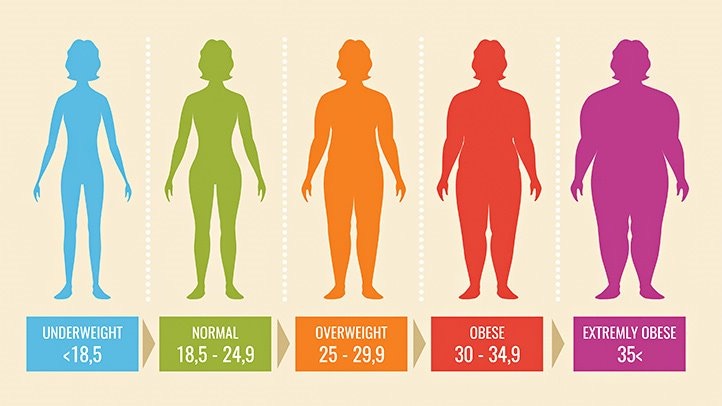
You can calculate your BMI here.
A normal BMI is between 18.5 – 24.9. Ideally, you’ll want to aim for a BMI of less than 30 before undergoing any cosmetic or plastic surgery procedure.
Why?
Being of a BMI 25+ does increase your chances of post-surgical complications such as delayed or problematic wound healing, fluid collection, deep vein thrombosis or slow recovery time.
If you are sitting in the obese range with a BMI of 30+ and have high body fat mass, you may be encouraged to start a weight loss program to lose excess fat before your cosmetic procedure. It may also be advised you maintain the healthy weight for about 6 months to improve your body contouring outcomes.
This is also the case for patients who are underweight with a BMI of less than 18.5 as they may not have much fat available for a BBL surgery. The patient may be advised to increase their BMI and put on weight in order to have enough fat for the fat transfer and ensure a good result.
How does being plus size affect the results of my BBL?
If you are plus size and deemed a good candidate for BBL by your cosmetic practitioners or plastic surgeons, the procedure might differ slightly from that of someone of a smaller size.
Using liposuction, the cosmetic practitioner will attempt to make the waist as small as possible removing the excess fat from areas such as the tummy and love handles. This will naturally create an hourglass figure without the need for extensive fat grafting in the buttocks and hip region.
This means you may not require as much fat injected into the buttocks to create the size and shape you require to get that ‘Kim Kardashian’ inspired derriere.
On average, our cosmetic practitioners inject 1,000 – 1,200 MLS of purified fat per buttock cheek. In some cases, we may inject up to 1.8L of the patient’s own fat into each cheek. For a plus-sized patient, this may be less depending on the liposuction results and the overall look they desire.
If you’re plus size and want to know whether you’re a suitable candidate for Brazilian Butt Lift surgery, get in touch with the Cosmos Clinic team on 1300-138-797 or at [email protected]. We’ll discuss your options based on your individual body composition and desires for the buttock augmentation procedure.
Brazilian Butt Lift Workout vs Surgery
Many people turn to butt exercises and Brazilian Butt Lift cosmetic surgery for similar reasons.
Complaints such as “my butt is too flat” or “I want a more shapely and larger butt” are all too common.
Both butt lift workouts and surgery can enhance the buttocks, but they can produce very different results.
Butt Lift workout
Lower body exercises such as lunges, deadlifts and bodyweight squats are designed to improve tone and increase glute muscle mass. Combined with high-intensity cardio and strength training, these butt-lifting exercise also help burn excess fat which aids overall weight loss.
As a result, your buttocks can appear more toned, tight and larger, dramatically changing your body composition. This, however, is not an instantaneous effect. In fact, quite the opposite and it requires dedication and focus along with a supportive diet to change your buttock size and shape.
Some buttocks, however, can’t be shaped with exercise and diet alone. For some individuals, no matter how many quad lifts, kettlebell squats or hamstring exercises they do, achieving a full and projected butt is difficult and even unattainable.
For others, toning the glute muscles can result in the presence of hip dimples and create an athletic appearance rather than a curvaceous figure they desire. And unfortunately, you can’t choose where you lose that stubborn excess fat.
These are just some of the reasons why the Brazilian Butt Lift surgery is so popular.
Brazilian Butt Lift cosmetic surgery
The Brazilian Butt Lift cosmetic surgery procedure is designed to not only enlarge but shape your buttocks and surrounding areas of the body. It’s a targeted treatment that uses your own fat to create your desired results.
The liposuction technique used in the BBL procedure enables the surgeon to accentuate your curves by removing excess fat from areas such as the love handles and lower back. This helps to create a natural, hourglass figure through contouring – something that can’t be achieved through exercise alone.
Transfering the purified fat into the buttocks helps to add volume, shape and perkiness. For those with hip dimples and unevenness, fat can be transferred to fill the concaves and even out the buttocks. It can also be beneficial to improve the symmetry of your buttocks if one side is smaller, flatter or droopier than the other.
Another advantage of BBL surgery has over butt exercises is that results can be viewed immediately. However, true results are seen after about 6 weeks once the swelling has subsided and the fat settled.
Butt lift workout vs BBL surgery
So, should you persist with your booty workouts or undergo Brazilian Butt Lift (BBL) surgery? Ultimately, it comes down to your goals and expectations.
Butt workouts aim to sculpt and tone the glute muscles while also burning fat. As a result, most people will have a muscular, athletic appearance if and when they achieve their goals.
Many BBL patients are wanting less of an athletic look. Removing fat from the flanks and accentuating the hips and buttocks, creates more of a naturally curvaceous figure that normally wouldn’t exist in those with an athletic composition.
If you do choose to opt for cosmetic surgery to enhance the size and shape of your buttocks, its worth remembering exercise is going to help you maintain your results long term.
To find out if the BBL surgery is right for you, explore the procedure in more detail here or contact our team on 1300-138-797 or at [email protected].
Artificial Sweeteners and Weight Gain: Are They Making You Fat?
As sugar has become the villain in our diets more people are choosing artificial sweeteners to avoid the “toxic” ingredient or help them achieve their weight loss goals.
But could these low to zero-calorie sweeteners like aspartame (also known as NutraSweet), Splenda and sucralose actually encourage weight gain?
Artificial sweeteners and your body weight
Artificial sweeteners have been promoted as a weight management tool to help overcome the obesity epidemic and reduce the risks of associated conditions such as type 2 diabetes, metabolic syndrome and heart disease.
So does drinking artificial sweeteners help you lose weight and stay thin?
They may contain no-calories, but epidemiologic data suggest a positive link between the use of artificial sweeteners and weight gain.
- A two-year study of 166 school-aged children found the more diet soda they consumed, the greater the weight gain;
- Observational studies of 3,682 adults over a 7-8 year period found those who drank diet soft drinks had consistently higher BMIs;
- A study of nearly 1000 children found diet soda drinkers had a significantly elevated BMI and weight circumference.
While there is a lot of evidence to suggest artificial sweeteners may cause weight gain, there are some randomized controlled trials such as this study that has found substituting low-caloric options for table sugar may result in a modest weight loss.
But it’s not just about weight gain or loss. There is also new research showing artificial sweeteners can alter our gut microbiome inducing glucose intolerance. This highlights our gut bacteria may play a critical role in preventing the occurrence of obesity-related and sugar-driven conditions such as type 2 diabetes.
Controlling your sugar cravings with artificial sweeteners
Sugar is considered as addictive as illegal drugs and this may largely be due to the sweet taste stimulating the brain’s reward receptors and causing food cravings. In animal studies, given the chance, 94% of rats would choose sugar-water over cocaine-water!
Sugar stimulates our brain’s reward centres through the activation of dopamine, our “feel-good” neurotransmitter. It also stimulates the release of our brain’s natural opioids just like heroin.
So what if you swap sugar for artificial sweeteners? If you replace your regular soda with a calorie-free diet soda, will your sugar cravings subside?
Zero to low-calorie sweeteners are found to be much sweeter than sugar, however, they’re used only in tiny amounts. And those packets like Splenda typically have the same level of sweetness as table sugar.
Non-nutritive sweeteners such as saccharine, aspartame, acesulfame-K, sucralose, tagatose, and steviol glycoside are believed to replicate the very same cravings and addictive behaviours towards sweet foods as sugar.
It’s those cravings that drive us to desire more sweet treats (from artificial or natural sweeteners) and may lead to weight gain after long-term consumption.
Low-calorie sweeteners and your overall food intake
To feel satisfied when eating, we require calories. While artificial sweeteners may hit the spot when it comes to our reward centres, some researchers believe being no-calorie, sweeteners may prevent us from feeling completely satisfied. This could lead you to consume more food and increase your overall calorie intake and in turn, gain weight.
This, coupled with our desire for the sweet taste, may drive us to opt for less nutritious and more calorie-dense foods which will cause weight gain.
It’s also believed, the extreme sweetness of artificial sugar substitutes may reduce our tolerance for naturally sweet foods. Dr David Ludwig, an obesity and weight-loss specialist at the American Boston Children’s Hospital, says people who frequently use artificial sweeteners may find naturally sweet foods, like fruit, and savoury options, like vegetables, unappealing and unpalatable.
Dr Ludwig’s other concern with the use of artificial sweeteners is that it may lead to us fooling ourselves into eating more food than otherwise necessary. We may fall into the trap of thinking: “I’m having stevia in my coffee, so it’s okay to have that biscuit” or “It’s diet Coke, so I can have three cans instead of one”.
What’s the verdict?
There are mixed views on whether consuming artificial sweeteners will cause weight gain. However, the sugar cravings and dependancy combined with the potential for an increase in food consumption suggest you may have an uphill battle in preventing weight gain.
And if artificial sweeteners are used to encourage weight loss, the actual amount may not be all that significant.
From an overall health point of view, you’ve also got to consider the intake of food products that contain artificial sweeteners. Most offer very little nutritional benefit if any at all.
For those who struggle with sweet cravings, blood sugar dysregulation or conditions like type 2 diabetes, you may want to consider avoiding artificial sweeteners and opting for a balanced, nutritious diet of low-sugar natural foods instead.
What Happens if I Gain Weight After Liposuction?
Liposuction is one of our most popular cosmetic surgery treatments offered at Cosmos Clinic. Women and men who choose to undergo liposuction often complain about stubborn areas of body fat that just won’t go even after adhering to a healthy diet and exercising regularly.
But we often receive questions about the effects of weight gain after liposuction.
If I gain weight, will it ruin my liposuction results? Will the fat cells come back after liposuction? Where in my body will new fat be if I do gain weight post-surgery?
These are genuine concerns for anyone considering a liposuction procedure.
Liposuction surgery is not a substitute for weight loss
It’s important to understand, liposuction is not a weight-loss procedure and shouldn’t be considered a substitute for positive lifestyle changes like a healthy diet and physical activity.
The procedure which removes excess fat cells from desired areas of the body offers body contouring and sculpting. Some of the most commonly targeted areas include the abdomen, love handles, thighs, back, buttocks and arms.
Explore our Liposuction procedure options here.
Liposuction surgery offers a permanent change to your body shape but it does not promise ever-lasting weight loss.
The return of fat cells after liposuction
During liposuction, excess fat cells are removed from the targeted areas of the body. These are permanently removed and will not come back or affect your new body shape.
Watch cosmetic practitioner Dr. Joseph Ajaka discuss weight gain after liposuction on our Instagram feed below:
If you do gain weight after liposuction, the weight will typically return to untreated areas of the body. For example, if you have liposuction to your abdomen, you may notice weight gain around your thighs if you do put on more kilos.
Significant weight gain, however, can result in new fat cells accumulating in both the treated and untreated areas of the body. This highlights the importance of making healthy lifestyle changes to maintain your results.
Maintain a stable weight before liposuction
As liposuction is not a weight-loss tool, it’s recommended that liposuction patients be at their ideal weight or close to before undergoing the procedure.
If you’re able to maintain a stable weight before liposuction, it will increase your chances of permanently preserving your liposuction results. The best way to achieve healthy weight loss and keep the number on the scales stable is by gradually losing weight rather than by extreme diets or supplements.
By implementing a healthy routine of a balanced diet and regular physical activity before you undergo the procedure, you’ll already be in the right mindset to keep it going post-surgery.
Exercise may prevent weight gain after liposuction
Maintaining your liposuction results isn’t just about watching your caloric intake. Studies have found exercise is effective in counteracting the growth of visceral fat after liposuction.
Visceral fat is fat that’s found deep inside the abdomen and is associated with increased health risks such as type 2 diabetes, heart disease and other obesity-related conditions.
Liposuction helps to remove subcutaneous fat cells which are located under the skin’s surface but doesn’t necessarily address the excess visceral fat. If you adhere to a sedentary lifestyle without regular exercise, you risk the chance of visceral fat levels rising whether you’ve had liposuction or not.
If you are considering liposuction, it’s essential you maintain a training regime post-surgery to not only maintain your results but for your overall health and wellbeing.
Unsure whether you’re a suitable candidate for liposuction surgery? Explore our liposuction procedures in more detail here. You can also contact our team at Cosmos Clinic to discuss your desires for the surgical procedure on 1300-138-797 or at [email protected].
The Brazilian Butt Lift – A Step By Step Guide
Thinking of undergoing a Brazilian Butt Lift to enhance the size and shape of your behind?
Brazilian Butt Lift, also known as BBL, is one of the most sought after cosmetic procedures. This is largely thanks to the likes of Kim Kardashian, Jennifer Lopez and Beyonce showcasing their curvaceous figures.
The team at Cosmos Clinic often get asked about what exactly goes on during a BBL procedure. Over on our Instagram feed, you can follow cosmetic practitioners Dr Joseph Ajaka and Dr Fraceso Fascetti as they perform the buttock augmentation procedure.
You can watch a video of the surgical procedure below.
Warning! If you’re a little squirmish or prefer not to see what really goes on behind the scenes of a cosmetic procedure, don’t click play! Instead, read an explanation of the stages below.
The Brazilian Butt Lift – A Step By Step Guide
After an in-depth consultation process with the cosmetic practitioners, the patient is marked up ready for the BBL procedure. Areas of the body where the liposuction is to be performed will be identified as well as the areas where the fat transfer will occur.
Stage 1 – Infiltration
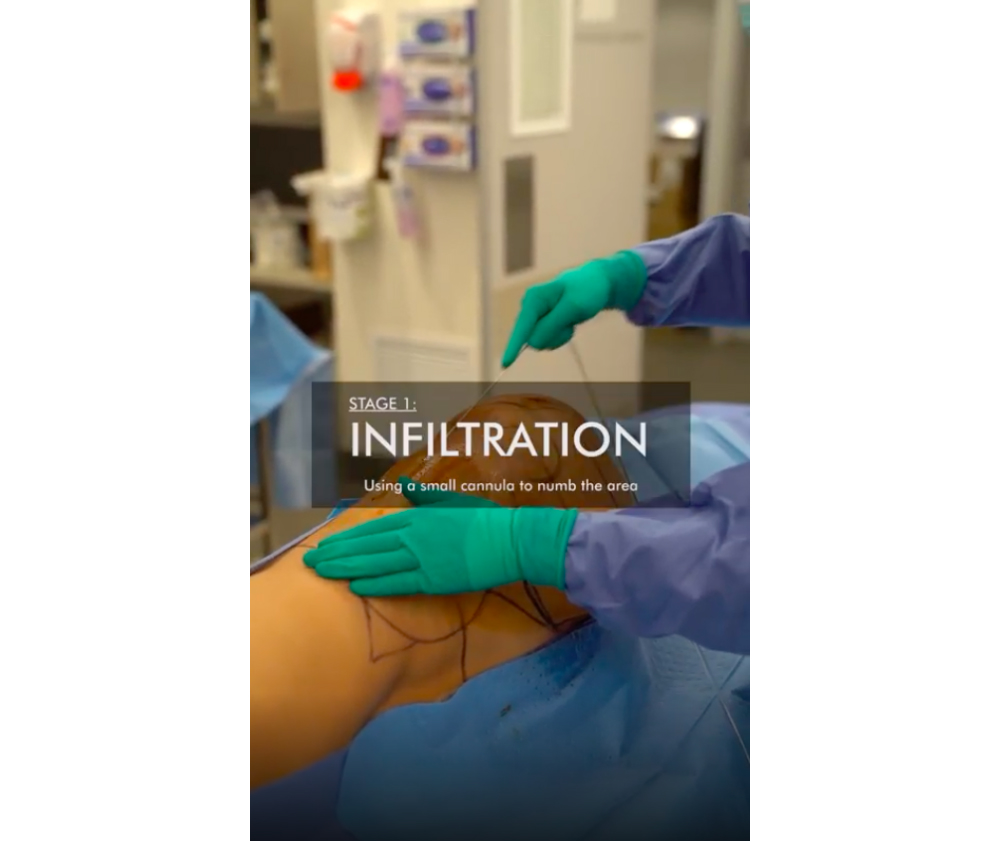
Using a small cannula, the areas where the excess fat will be removed via liposuction are numbed. These are typically the tummy, thighs and love handles where there is a decent amount of fat available for fat grafting.
The numbing solution will help to soften up the excess fat getting it ready for the Vaser Liposuction phase.
Stage 2 – Vaser

During the Vaser Liposuction stage, an ultrasound probe will be inserted via small incisions to melt the excess fat and tighten the skin.
It works with ultrasound technology releasing heat into the fat layer and melting the fat cells like butter.
Stage 3 – Suctioning
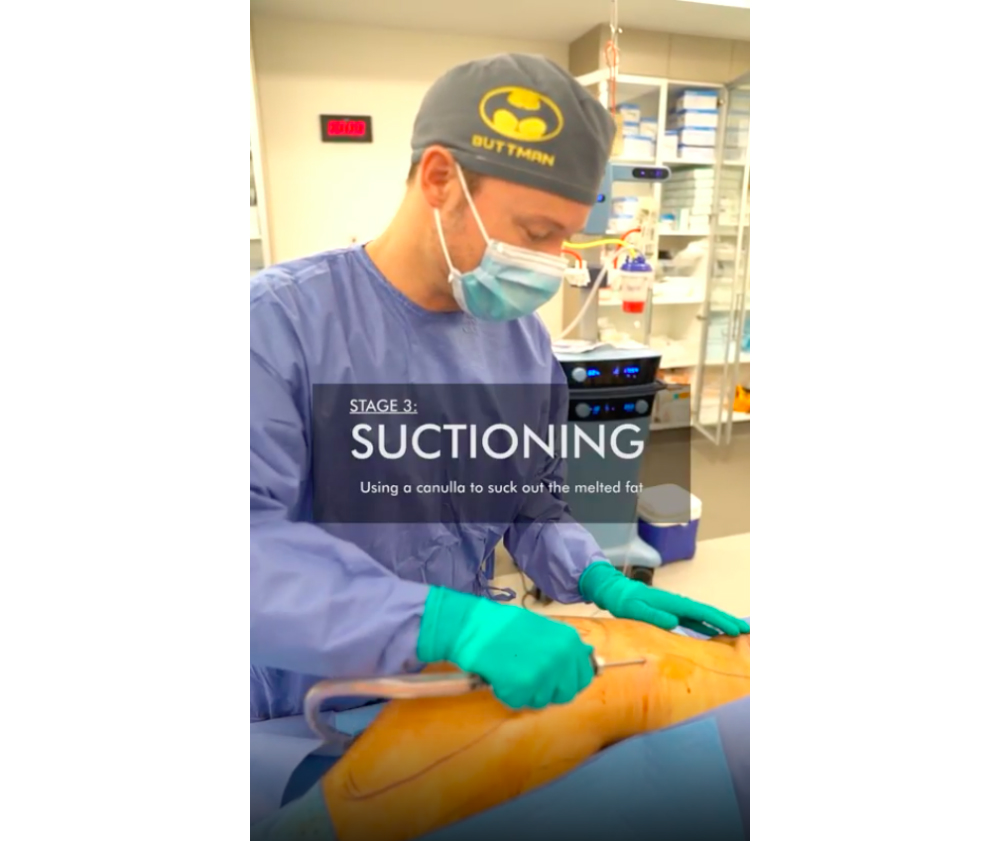
Once the fat cells are melted, another cannula is used to suck out the melted fat from the targeted area ready for the fat transfer.
The patient’s own fat collected will be purified before it is distributed into syringes and injected into the buttock area.
Stage 4 – Injecting the fat
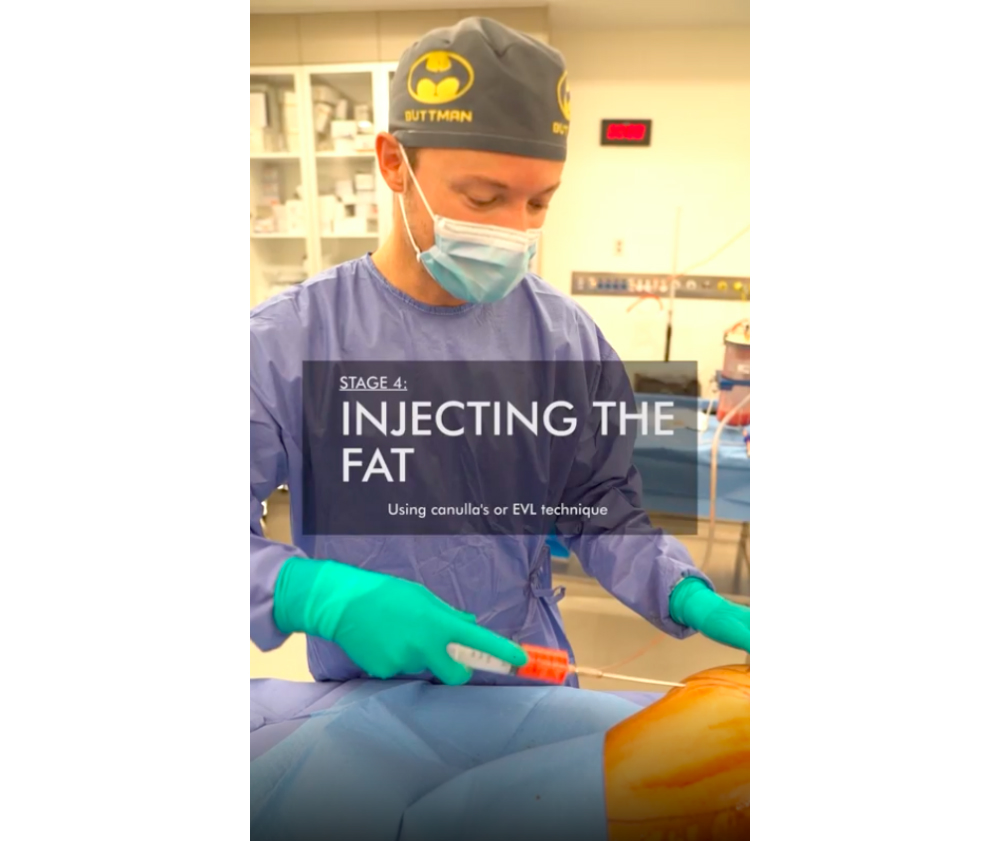
The final stage of the BBL surgical procedure is injecting the patient’s own fat into the buttocks to enhance the size of the buttocks, provide a buttock lift and finish with contouring the shape of their derriere.
During the bbl surgery, the fat is injected by cannulas or EVL technique. For those with smaller buttocks or limited fat available syringes are the preferred surgical technique. This increases contouring precision and ensures as much fat as possible is transferred into the buttocks.
For more information about the Brazilian Butt Lift, visit the cosmetic procedure page here. If you’re considering any cosmetic or plastic surgery and would like to know if you’re a good candidate, contact the Cosmos Clinic team here or call on 1300-138-797.
5 Things to Know About Your Vaser Liposuction Recovery
Vaser Liposuction is a day cosmetic surgery procedure that takes approximately 2-3 hours to remove the fat cells. The time will largely depend on the extent of fat removal and contouring required.
The treatment is performed under twilight sedation which eliminates the need for a general anaesthetic and reduces the side effects associated with more invasive procedures.
Once the cosmetic procedure is completed, patients will spend about 2 hours of recovery time in the clinic before being able to go home.
There are several things to remember when recovering from a Vaser Liposuction procedure. Read below for the key 5 points:
1. Wearing a compression garment & binder
After your Vaser Liposuction procedure, you’ll be provided with a compression garment. This garment helps to compress the skin of the treated areas of the body and prevents the swelling of fluid in the days and weeks after the procedure.
The compression garment also aids the tightening of the skin to improve the results of the body contouring.
For patients who have had Vaser Liposuction in the tummy region, an elastic band binder with a plastic board will be applied. This enables the patient to sit down during the recovery period post-surgery while maintaining a flat tummy. Without the board, curves, lines and foldings can occur as the tummy muscles relax in the seated position.
Like the compression garment, the binder helps to assist with skin tightening.
It’s important these compression garments and binders are worn for the first three weeks full-time (day and night) only to be removed to shower. In the second three weeks of recovery, the patient only needs to wear the compression garment part-time (half a day/12hrs).
Lymphatic drainage massage will further assist the removal of fluid as discussed below.
2. The leakage of fluid
During the first week of recovery after the surgical procedure, the patient may experience some leaking of the numbing solutions from the incisions.
The cosmetic practitioner will insert a small, plastic straw-like item called a drain into the lower abdomen incensions and one in the belly button. These allow the leaking fluid to drain from the treatment area faster. You should expect this to occur for 4-5 days during your Vaser Liposuction downtime.
The drains will be removed during one of the follow-up recovery consultations.
3. Lymphatic drainage massage
Lymphatic drainage massages are crucial to the healing process and overall results of the Vaser or traditional liposuction procedure. This entails a gentle massage performed by our physiotherapists to help squeeze out excess fluid and swelling that is accumulating behind the skin.
During the first 10 days of recovery, a patient can expect to have 4-5 lymphatic massage consultations scheduled.
4. Pain management
After a Vaser Liposuction procedure, the patient can feel some soreness, particularly around the tummy region for about 4-5 days. Pain in other areas of the body such as love handles and thighs isn’t as significant.
Most patients report the pain from the cosmetic surgery procedure reduces after about 5 days.
The cosmetic practitioner will supply all the medication required to manage the pain as well as antibiotics and nausea medications if required. Within a week, the patient will not require any further pain medication.
5. Having a shower post-surgery
Most patients take their first shower 48 hours after the Vaser Liposuction treatment. We recommend patients lie down on a bed and remove the compression garment. It is important to remain lying down for 5-10 minutes before slowly sitting up and then eventually standing up when you feel comfortable and not nauseous or light-headed.
The water temperature should be lukewarm, not hot for at least the first shower. After a couple of days of recovery time, the patient’s blood pressure will stabilise and the patient can remove the compression garment without the need to lie down prior.
Once recovered, patients are advised to follow a healthy lifestyle of a nutritious diet and regular exercise to maintain the results of the body sculpting procedure. For more information about recovery time and the cosmetic procedure, explore our Liposuction options here.
To discuss your individual needs for cosmetic surgery whether it’s weight loss, stubborn fat removal or body contouring, contact Cosmos Clinic here or calling on 1300-138-797.
Why Your Daily Cardio Isn’t Helping You Lose Weight
Is your cardio addiction hindering your weight loss goals? Running up a sweat on the treadmill daily to offset your calorie intake is not the most effective way to lose weight. In fact, you could be spending more hours at the gym than you need to!
Why daily cardio isn’t resulting in weight loss
There are several reasons why you might not be losing weight even though you are sweating it out at every cardio session. These include:
- Your body may have adapted to the form of exercise;
- You’re not performing at a high enough intensity;
- Your diet isn’t supporting your weight loss goals;
- You’re overeating or snacking on ‘treats’ as a reward;
- You’re not building muscle mass
If you’re not seeing the weight loss results you’ve hoped for, switching up your physical activity may be the answer. Here are some tips of what you can do instead of cardio 7 days per week to achieve a healthy weight.
Vary your workout
Not only is doing cardio 7 days of the week boring, but it also may not be helping you burn body fat and build muscle efficiently. Research shows, people who do a combined workout program of resistance training and cardio reduce more body fat and build more lean body mass than those who just do cardio workouts.
Combining resistance training and cardio in your weight loss program may help you reduce your bodyweight quickly and help you create definition at the same time.
Start lifting weights
Time to stop fearing weights and start enjoying lifting them! Strength training is an important component of successful weight loss. It’s also a great way to prevent weight gain long term.
While it may result in fewer calories burned during your workout when compared to cardio, it does help build more muscle mass. As muscle can help boost the metabolism, with a greater muscle mass you’ll burn a higher number of calories during rest.
Up the intensity
Rather than focusing on the amount of time you workout, start focusing on the intensity to help encourage greater weight loss. If you’ve done the same type of cardio for a long period of time, your body has likely adapted to that intensity and will, in turn, burn fewer calories.
Workouts that increase your heart rate near to the maximum achieve the desired ‘afterburn’ feeling, encouraging your body to burn calories up to 48 hours after you’ve worked out. Studies show high-intensity interval training for just 30 minutes can burn more calories than long endurance style workouts.
Have a rest day
It might sound counterproductive to have a rest day if you’re trying to lose weight, but recovery is very important especially between high intensity or strenuous workouts.
Physical activity causes metabolic stress as it depletes your muscle cells of energy. It can also cause physical stress on the body. Your body needs time to repair and refuel after vigorous workouts to avoid injury and to ensure there is energy in the tank to perform at a high enough intensity to encourage weight loss.
That doesn’t mean you shouldn’t work out at all. It just means you should add light cardio or stretching around the days you are working out at the hardest.
Lower your stress levels
Stress, whether it’s physical or emotional, leads to the release of the stress hormone, cortisol. While cortisol is important and part of a normal response to stress, long term excess cortisol can be hindering your weight loss goals.
It does this by encouraging your body to hold on to and store body fat as a survival mechanism. Excess cortisol can also lead to disrupted sleep, blood sugar dysregulation, high blood pressure, adrenal depletion and sweet cravings – all of which will work against you achieving a healthy weight.
Implementing some stress management techniques such as meditation, yoga, deep breathing or time in nature could help you reduce your waistline.
Find a diet that works for you
Exercise is just one component of weight loss. If you’re relying on cardio alone to lose weight you may be left disappointed when you jump on the scales. Diet is about 80% of the weight loss battle and unfortunately, there is no magic pill or one size that fits all.
A fad diet may help in the short-term, but discovering a healthy eating plan that’s tailored to your individual needs will achieve greater results and health benefits long term. If you’re struggling with healthy weight loss, speaking to a healthcare professional such as a dietitian or nutritionist may help you achieve the results you desire.