New mBMI Obesity Predictor Measures Up
For decades, we have relied on the results of a tape measure, scales and a simple BMI (Body Mass Index) calculation to tell us whether we are overweight, obese, normal or underweight. However, the latest research, published in Cell Metabolism, reveals that rather than performing a BMI calculation, we should be drawing blood to get the best picture of our current and future weight and health.
Dr Ajaka Discusses New Hospitals for Cosmetic Procedures
[00:00:00] Dr. Joseph Ajaka: We’ve recently opened a new hospital only about two weeks ago. It’s been quite the journey to get there. It’s quite difficult to find premises that fits all the criteria needed. You need to have two exits, you need to have an ambulance bay, the building needs to comply in many ways with the local health departments. Once you found that facility, the next step is to get an architect who can draw it up to New South Wales health standards or the local health standard that are required in the different states. The building process can take about nine months and then you’re on your way once you receive the approval from the local health department they walk through.
[00:00:42] Interviewer: What has the standard been before that? What have people been able to get away with in terms of where they’ve been carrying out cosmetic operations because they fall under different guidelines to normal hospital approach, don’t they?
[00:00:52] Dr. Joseph Ajaka: Correct. In the middle of 2016, the New South Wales government introduced new legislation which said that any major cosmetic procedure needs to be performed in a licensed facility, which means it needs to be formed in a hospital facility. Licensing means that any complications need to be reported to the local health department. The facility needs to be credited, which means certain protocols and procedures need to be put in place and need to be followed. You get audited every one to three years. It’s a higher level of care for all patients across the country. We welcome the changes.
[00:01:30] Interviewer: Now, obviously you’re trying as a doctor, but along the way, you’ve had become a businessman and a property developer as well, haven’t you? Tell me about your journey, if you like, through where you started and where you are now.
[00:01:39] Dr. Joseph Ajaka: I remember signing a lease 11 years ago and being so nervous about signing a lease. We started off in Double Bay. Three or four years later, we bought a property in Double Bay and fitted out the whole clinic. We’ve since build a hospital recently. We’ve also opened clinics in Canberra about eight years ago, in the Gold Coast about four years ago, and in Adelaide about six years ago.
Along, I’ve had lots of guidance from my brother who’s an actuary, and he’s in private equity and property development and pubs, a lot of guidance. It’s been a great journey, and I’ve learnt a lot. I wish in medical school they teach you a bit of business alongside of all the medical stuff because it would be very useful.
[00:02:24] Interviewer: Has that been as much a part of growing the business like the property side as much as the cosmetic in staying ahead of the trends and what the latest piece of equipment is? It’s also very much on where you position your clinic and how you grow with legislation.
[00:02:36] Dr. Joseph Ajaka: Absolutely. If you look at, say, for example, Laser Clinics, they grew by positioning themselves in very good positions, and you can see Laser Clinics in every major corner now. Yes, they’re a massive company across the country.
[00:02:49] Interviewer: Should people be wary of cosmetic procedures that take place out of these really regulated facilities? Obviously, we know that they do happen.
[00:02:57] Dr. Joseph Ajaka: Yes, they still do happen. People find ways of getting around the legislation. There’s not many people policing them, which is the worrying thing. I think Victoria has come up with even tighter regulations only in July which makes it pretty much impossible to get around the regulations, and I do see that happening across the country in the next couple of years as well.
[00:03:19] Interviewer: Why did you get in to this as a business as opposed to just taking it as a standard medical track?
[00:03:24] Dr. Joseph Ajaka: It wasn’t a planned decision. It was something that I genuinely love doing. I had cosmetic procedures myself about 15 years ago, and I saw the impact that had of myself and then I started treating patients, and I saw that positive impact that it had on them as well. That’s why I started the business, so it’s all been a bonus and a learning experience on top of that. I went with my passion and that’s why we’ve ended up where we are.
[00:03:51] Interviewer: There’s people who are sometimes uncomfortable about seeing the idea of medicine as a business, but it is at any level, isn’t it?
[00:03:56] Dr. Joseph Ajaka: Absolutely. We have 50 employees across the country, and we have four officers. There’s always something to juggle regarding the business side of things. It’s not just all medical. I try and delegate a lot of that to other people so I can focus on the medical stuff, but you still have to have some degree of involvement and you do learn a lot along the way.
[00:04:21] Interviewer: That is the main way to advance through your career in any medical discipline, isn’t it? by sort of taking ownership of a business and growing that in itself.
[00:04:29] Dr. Joseph Ajaka: Absolutely. The other important thing is have a great team behind us. I mentioned my brother helped with the hospital, but we have a great head nurse, Tommy, and he’s been liaising with the New South Wales health department heads. It’s not an easy process, and there’s many hurdles to overcome, so you need a great team to build a hospital really and to staff it as well.
[00:04:50] Interviewer: Are there other sort of areas of medicine where this is happening where people are developing a whole hospital and it’s not like your local public hospital?
[00:04:58] Dr. Joseph Ajaka: Yes, I think in ophthalmology, that’s another big area, and gastroenterology, they’re the two big areas, so colonoscopies have specialised little hospitals now that just do scopes and same with eye surgeons, they have their own little hospitals. They’re the main three ones that they’re coming through.
[00:05:17] Interviewer: Do they tend to also be privately owned and have those same requirements for an ambulance bay and all sorts of things?
[00:05:21] Dr. Joseph Ajaka: Absolutely, yes. They’re usually owned by an ophthalmologist or gastroenterologist, the other local hospital that’s been built next to us in Double Bay is owned by a gastroenterologist and the other one in town, in the city, is owned by ophthalmologists so, yes. There’s lots of doctors who are now taking it upon themselves to build hospitals just for their own benefit. It’s a convenience thing as well. When a patient wants to book a procedure, you have to call the hospital to book it. If that time slot is not there, then it becomes very difficult for the patient and for you, while if you have your own facility, it’s much more convenient. You can do it whenever you want.
[00:05:58] Interviewer: Do you think there is reassurance for patients now whether it’s ophthalmology, or gastroenterology, or cosmetic procedures to know that the hospital that they’ll be at meets the same requirements as any hospital?
[00:06:08] Dr. Joseph Ajaka: Absolutely. Pretty raising the bar is great for everybody, may increase the running cost but overall it improves the experience and you have to do the care for the patient and that will in the long term help everybody.
[00:06:23] Interviewer: As for cosmetic medicine, do you see that is something that’s going to continue to grow. Obviously, there’s new procedures coming online and there’s a shortage of patients wanting to change things about themselves?
[00:06:33] Dr. Joseph Ajaka: I’m still amazed by the last couple of years in the growth in the industry. I started in the industry 15 years ago. I knew it was going to be a big industry, but I’m still blown away by how big it is and how mainstream it has become. The growth in the last four years in our business has been much greater than say in the first seven years of the business, and I honestly think it’s because of the rise of social media.
We’re all having wrist injuries because of Instagram, and we all want to look a certain way, and the technology is becoming more advanced and safer, so the industry here just keeps skyrocketing. There’s new technologies all the time that we have to keep abreast of, and that’s really exciting for me to be part of such a dynamic industry. I’m glad that I took this course in my career.
[00:07:21] [END OF AUDIO]
Are Fat Camps the Answer to Australia’s Child Obesity Epidemic?
The statistics don’t lie, childhood obesity is a major public health issue. With 25% of Australian children overweight or obese in 2017, it’s an issue that needs to be addressed.
Obesity Epidemic Causes Concern for Gen Z
What does the future for Australia’s most overweight generations look like? People who are overweight or obese are at higher risk of severe health complications and chronic illnesses. Despite efforts to educate the public on the importance of healthy eating younger generations are still more likely to be obese than those who grew up before this message was well publicised.
Loss of Appetite After Liposuction? Here’s Why…
It’s no coincidence that you’re not feeling as hungry as before your
Liposuction procedure. To understand why, first, you need to understand the role your excess fat was playing in making you feel hungry.
The Quest for a Slimmer Physique: What’s Australia’s Most Popular Type of Liposuction?
Cosmetic surgery is on the rise in Australia, with more and more Australians seeking cosmetic treatments to achieve their desired appearance. According to Harpers Bazaar Liposuction was the second most enquired about procedure in Australia in 2017.
A study by realself.com, the world’s largest online community for sharing information about cosmetic surgery, found that Sydney is the Australian city most interested in liposuction, then Brisbane, followed by Melbourne and Perth. Cosmos Clinic Doctor Dr Joseph Ajaka has noticed that “the tummy and love handles is the most popular area to get liposuction amongst men and women”, and the second most popular area is “man boobs in men and legs in women”.
Interestingly, Dr Ajaka reveals, “50% of our clients are men. Men tell their friends. In fact, men are more willing to come on tv with me to tell their story than women”.
So why is Liposuction so popular? A healthy diet and regular exercise are important for staying in shape, but some people are genetically predisposed to hold more fat cells in certain areas so in this case diet and exercise will not get rid of this stubborn fat.
So even if you’re doing everything to stay in good shape, you can still be stuck with fat in certain areas. Liposuction is a popular body contouring treatment that decreases fat tissue in these problem areas.
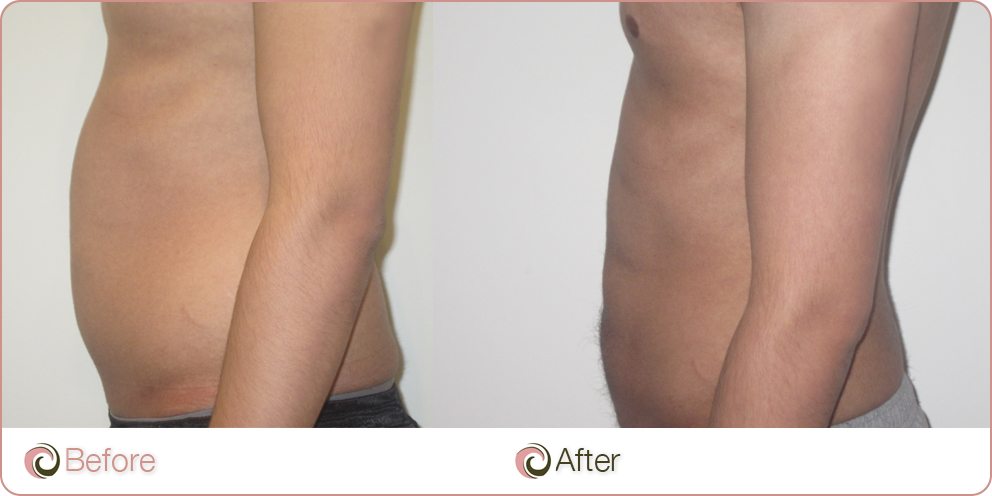
There are 7 main types of Liposuction, here’s a quick overview:
1. Suction Assisted Liposuction (SAL)
SAL is the standard liposuction technique. Basically, a surgical procedure by which a small, tube called a cannula is inserted into the problem area, the fat is carefully pushed and pulled through the lump of fat, helping to break up the fat tissue as it sucks the fat cells out of the body.
2. Laser-Assisted Liposuction
Laser liposuction is a minimally invasive procedure that uses heat energy from fibre-optic lasers to help break down or “liquefy” fat cells making it easier to suction the fat tissue from the treatment area.
3. Ultrasound Assisted Liposuction or VASER
VASER Liposuction is also minimally invasive and uses ultrasonic energy to break down the fatty tissue. Many cosmetic practitioners find ultrasonic assisted liposuction to be more effective in separating fat cells because heat is omitted from the length of the probe and the tip, whereas with laser liposuction heat is only delivered from the laser at the tip of the probe.
Learn more about VASER liposuction
Check out this video of VASER liposuction performed on the arms:
https://www.instagram.com/p/Bfj9h57lO8j/?hl=en&taken-by=cosmosclinic
4. High Definition Liposuction (HDL)
High Definition Liposuction, is another form of VASER ultrasound-assisted liposuction the difference is that it’s designed to produce ultra-defined results. Unlike other forms of liposuction designed to remove larger volumes of fat, Vaser Hi-Def removes a superficial layer of fat from around the muscle groups which increases their visibility, giving a more defined, athletic look.
More commonly performed around the upper body/abdominal area, VASER Hi-Def has a very quick recovery time. Find out more about High Definition Liposuction.
5. Vibration Assisted Liposuction
Liposuction technology known as The Micoaire uses air pressure to activate vibration of the tip of the cannula, which helps to break up the fatty tissue before it is sucked out.
6. Radio Frequency Assisted Liposuction
This method uses radiofrequency assisted liposuction (RFAL), which releases heat energy into the fat tissue through the cannula inserted into the skin to an electrode positioned outside the skin. This focuses heat energy in the treatment area helping to liquefy the fat cells. Dr Ajaka notes that this method is “more painful than VASER”.
7. Water Assisted Liposuction
Using a system known as Bodyjet, water-jet assisted liposuction (WAL) a flat, fan-shaped water-jet is used to gently separate the fat from the tissue structure while it’s simultaneously sucked out.
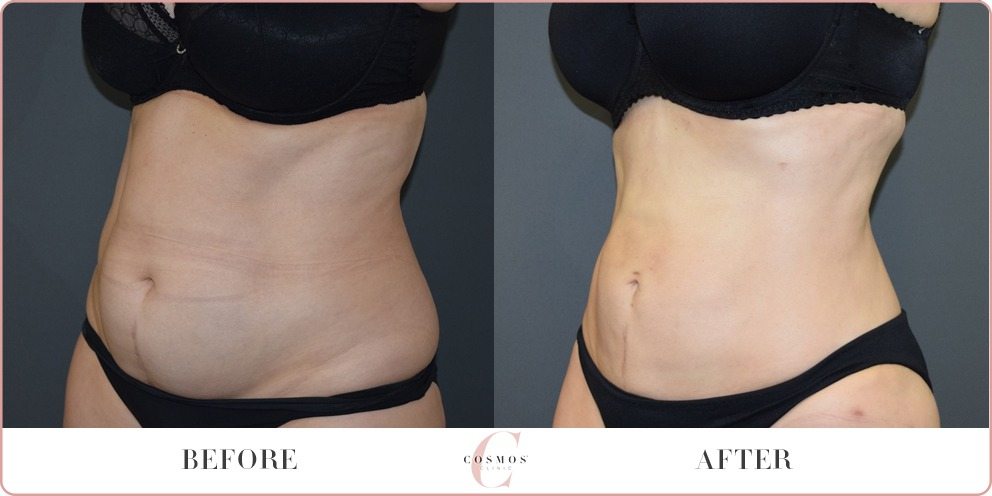
So, which is the most popular type of lipo in Australia?
Well, that really depends on the cosmetic practitioner and which type they feel they get the best results with. Among Cosmos Clinic surgeons VASER liposuction is the most popular. Dr Ajaka explains that at Cosmos Clinic they have all the machines, but they choose VASER because “it gives the best results with the least downtime”.
There are many points in favour of VASER liposuction. For example, compared with Laser Liposuction it’s generally more efficient at separating fat cells. The ultrasound probe is capable of breaking down denser fat tissue due to the vibration it creates. While the intense heat at the tip of the laser probe means that the results have the potential to be less even than results from VASER liposuction.
Dr Ajaka also explains that “Vaser liposuction is superior to other forms of liposuction because it melts the fat like butter before being suctioned out so that you get more fat cells out and a smoother finish”. He uses the analogy that “traditional liposuction is like trying to suck a brick out through a straw, so you often leave fragments of fat inside, and the results can be lumpy”.
Another benefit of VASER pointed out by Dr Ajaka is that “Vaser liposuction also helps tighten the skin via the stimulation of collagen fibres from heat emitted by the Vaser probe”.
Also, with VASER liposuction the fat cells are mostly left undamaged which means they are suitable for fat transfer procedures like the Brazilian Butt Lift, a procedure that is becoming increasingly popular among Australians.
Find out more about Liposuction at Cosmos Clinic and be sure to check out some more before and after photos. The video below talks about a liposuction trend that might surprise you.
Three Australian Research Teams Battle To Find Ageing Cure
Searching for the fountain of youth has been a quest for many and many have failed. Now, three Australian research teams are racing against the clock and each other to find a treatment to cure the inevitable condition of ageing. And they are closer than ever before.
Are Artificial Sweeteners Sabotaging Your Weight Loss Efforts?
If you’re trying to lose weight, chances are the first food you cut out of your diet was sugar. In searching for that sweet hit, you may have turned to non-sugar sweeteners which we’re told will help reduce your calories and drop the extra kilos.
New research from the University of Sydney’s Charles Perkins Centre and the Garvan Institute of Medical Research suggests artificial sweeteners could actually be sabotaging your weight loss efforts by making you eat more.
Groundbreaking Study Into Cells That Control Our Appetite Brings New Approaches In Treating Obesity
Is your ravenous appetite derailing your weight loss goals? New research has found our brain plays just as big a role in controlling our appetite, eating and weight as our stomach. This has the potential to result in new approaches in the treatment of obesity and obesity-related diseases.
Lead by Professor Nicholas Dale of the University of Warwick, the ground-breaking research has found tanycytes (cells in part of our brain that controls energy levels) have the ability to detect nutrients in our food and communicate to the brain directly to tell us to stop eating.
Feminine Curves Are Here To Stay Says Dr Ajaka
With curvaceous celebrities such a Beyoncé, Jennifer Lopez and Kim Kardashian in the spotlight and an increase in inspirational fitness enthusiasts trending on Instagram, cosmetic surgery to enhance curves is more popular than ever.
Dr Ajaka told Daily Mail Australia, feminine “curves are definitely in and here to stay”.