
The amount of fat you may want to remove through liposuction is likely to be different than someone else. Maybe you’re considering liposuction to target areas of your waistline or to complement a breast augmentation mammoplasty procedure. While someone else may be wanting a significant change with liposuction surgery.
It is generally advised that the amount of fat to be removed during a liposuction procedure varies based on individual factors such as health status, body composition, and specific surgical considerations. The decision on the volume of fat to be removed should be made by a qualified medical practitioner after a thorough assessment.
There is some dispute in the medical community, however, about how many litres or pounds of fat can and should be removed with patient safety in mind. A 2015 study suggests that this guideline should be replaced with a sliding scale based on the patient’s Body Mass Index (BMI).
Many doctors questioned this arbitrary guideline as there was no scientific data to support this absolute threshold. For years there was debate over how the volume limit was calculated.
According to Dr Karol Gutowski, a clinical associate professor at the University of Illinois at Chicago, the existing guideline on the limit of fat removal during liposuction warrants further scientific investigation to establish a more evidence-based approach.
Dr Gutowski and his colleagues established a database to record the outcomes of liposuction procedures performed over the previous fifteen years. The goal was to evaluate the correlation between liposuction volume and complication risk, taking into account the patient’s BMI.
The findings, published in the September issue of Plastic and Reconstructive Surgery, revealed that those with a higher BMI could have more fat removed by liposuction.
During the study, the investigators tracked over 4,500 liposuction patients most of whom were women; however, a considerable increase in men undergoing the cosmetic surgery was also noted. A large majority of the patients were treated as outpatients and were able to go home the same day following the procedure.
Did Risk Of Complication Rise When More Fat Was Removed?
Research indicates that the volume of fat removed during liposuction can influence the risk of complications. Larger volumes of fat removal, especially in patients with higher BMIs, may be associated with a higher rate of complications. It is important for patients to discuss these risks with their medical practitioner.
The Risks Of Complication From Removing Too Much Fat
What are the risks? The body’s normal response to the trauma of the surgery is to swell, and excess fluid can build-up in the cavities where the fat has been removed. Most of the fluid will clear within six to eight weeks, however, sometimes seroma will form.
Generally, seroma is not considered a serious complication, and usually will resolve slowly on its own. Depending on the severity, however, the doctor might remove it by draining the excess fluid to speed up recovery.
Possible complications of removing excessive amounts of fat include the following;
- Unwanted lumpiness or hollow dimpling of the skin.
- Increased health risks such as anaesthesia-related reactions, infections and oedema.
- Longer surgical procedures can increase the likelihood of blood clots forming, seromas, drop in blood pressure and toxicity.
- Fluid build-up, also known as seroma which can require drainage (the complications that occurred were almost all due to an increase in seromas).
BMI Can Help Determine Liposuction Treatment
Dr Gutowski said that through their research they identified the key factor in the liposuction complication risk relating to be the patient’s BMI. Those with the higher BMI were better able to tolerate large-scale fat removal during the procedure than those with a lower BMI.
This prompted the authors to introduce the concept of a “relative liposuction volume threshold” which is based on BMI. This tool enables doctors to have a sliding scale to assess complication risk and how this would increase for each individual patient.
This makes sense considering that for a patient weighing 50 kg, removing 1 litre of fat may be excessive, whereas removing 4 litres of fat during one liposuction procedure in a patient of 100 kg might not be excessive.
Each Patient’s Individual Risks Must Be Considered
In addition to the BMI sliding scale approach, each patient’s own individual risk factors must be considered. Factors such as the length of the surgery, adjunct cosmetic procedures and the patient’s overall health before surgery should all be taken into account when evaluating the liposuction risk.
Liposuction for Removing Different Amounts of Fat Based On BMI, Individual Risks & Desired Results
Cosmos Aesthetics doctors use this tool and consider the patient’s desired results to determine the most suitable treatment for the patient. “Our risk assessment tool can further aid shared decision-making between the doctor and patient by linking BMI and liposuction volumes,”.
Vaser Liposuction
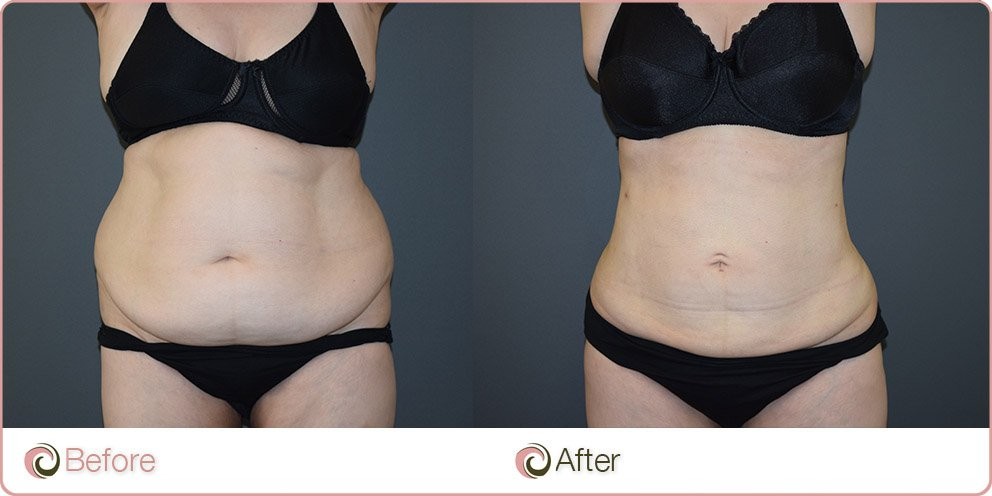
This is your typical liposuction used to remove fat deposits from areas such as the abdomen, hips, arms, back, flanks, legs and even the chin. Here is an example of a Cosmos Aesthetics patient’s results from Vaser liposuction performed in the abdominal area.
Large Volume Liposuction
Patients who are overweight may be suitable candidates for large volume liposuction. Cosmos Clinic performs large volume liposuction procedures using Vaser (ultrasound) liposuction if it’s deemed the best option for the patient. Large volume liposuction can remove up to 10 litres of fat, to give you an idea of what’s possible, check out some large volume liposuction before and after photos, here is an example;
Vaser Hi-Definition
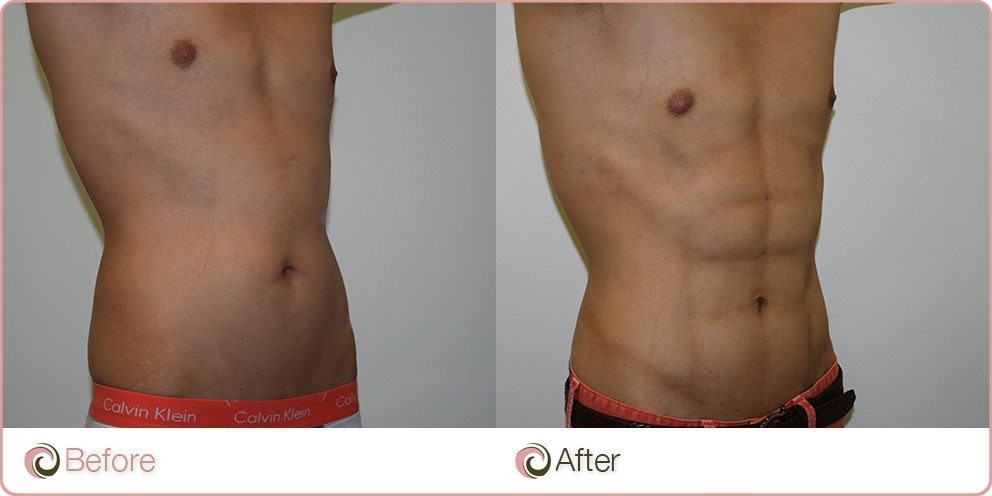
Vaser Hi-Definition Liposuction is for patients who already experienced weight loss or have a relatively athletic physique and want to refine certain areas.
Disclaimer:
1. Individual results will vary from patient to patient.
2. All photos are of patients from Cosmos Clinic, and all ‘after’ images are taken 6 weeks or later post-procedure.
3. Recovery, side effects, and potential complications experienced will vary for each individual patient.
4. Photos and videos featured are not a guarantee that your results will be the same as another person, and do not guarantee you will receive a particular surgical outcome.
5. Content on our website and social media pages is published with the consent of our patients. The content featured is general in nature and does not constitute medical advice.
6. Any invasive or surgical procedure carries risks, side effects, and complications, which can be permanent.
To learn more about the different types of liposuction check out our post on Australia’s most popular type of liposuction.
Liposuction May Not Be The Answer
It is important to note that liposuction is a cosmetic procedure and not a weight loss procedure. You will lose some excess fat and weight, yes, but think of liposuction more like a body contouring tool to help remove fat that is resistant to a healthy diet and exercise. Liposuction surgery also does not address cellulite or resolve body weight issues.
Vaser liposuction may promote skin tightening; however, if an excessive amount of fat is removed patients can be left with additional excess skin. Dr Ajaka, explains that patients requiring greater amounts of fat removal may be better candidates for procedures such as a abdominoplasty tummy tuck or thigh lift (thighplasty) if they have excessive skin.
Those who are overweight and want to undergo liposuction may be more suitable to making some lifestyle changes and committing to losing some of the additional weight through exercise and diet before the treatment.
Check out more before and after photos and learn about Vaser Liposuction here, also read our article about life after liposuction which offer tips on how to maintain your post-liposuction outcomes over the long term.
Related Posts